There’s a reason charcuterie boards appear at every gathering worth attending. They require no cooking, scale effortlessly, and look far more impressive than the effort behind them warrants. But if you’ve never built one, the cheese aisle can feel paralyzing. This Beginner Board Formula removes the guesswork.
Follow it once, and you’ll never need it again.
To be honest – there are many different formulas and rules I use to make boards – the key is to find one that works for you. Here are a few others that work well:
Hi, I’m Gretchen - creator of Amazing Charcuterie Boards. I help home hosts and beginners create beautiful, stress-free charcuterie boards with simple rules, realistic portions, and easy styling techniques.

If you’re planning your next board, you may also find these helpful:
→ Charcuterie Board Portion Calculator
→ How to Design a Charcuterie Board (simple rules & layouts)
→ The Best Charcuterie Board Pairings

Want more board ideas and planning guides? Join my free newsletter here or search ideas.
The Formula: 3-2-2-1-1
Think of this as your skeleton. Every element has a job.
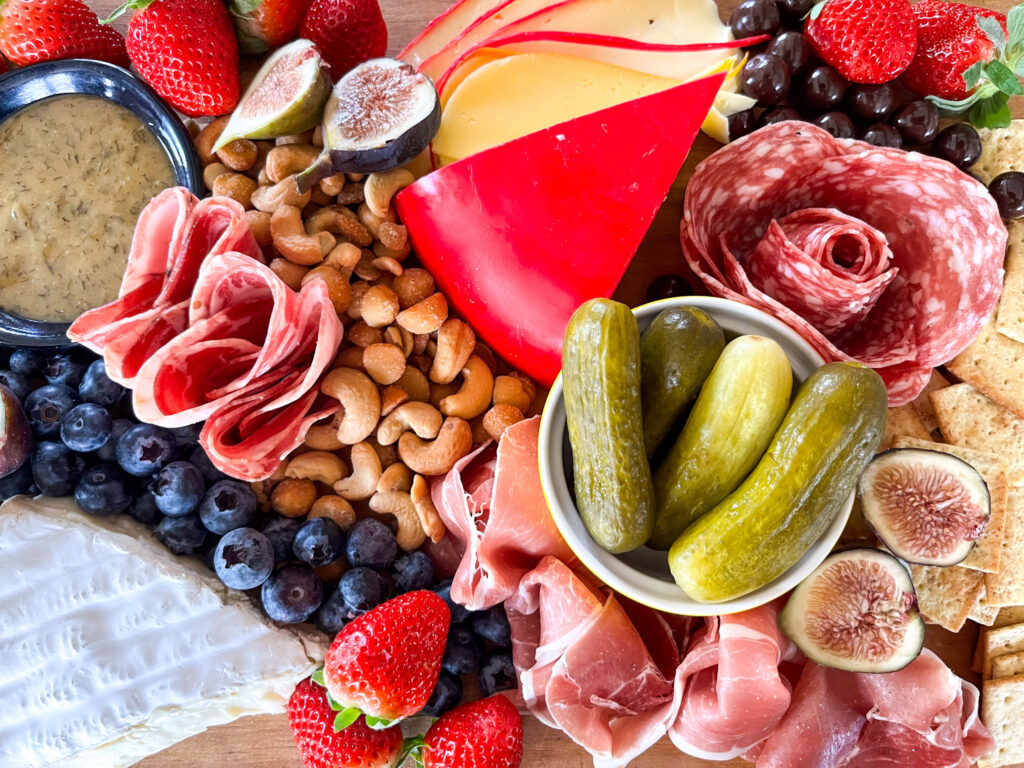
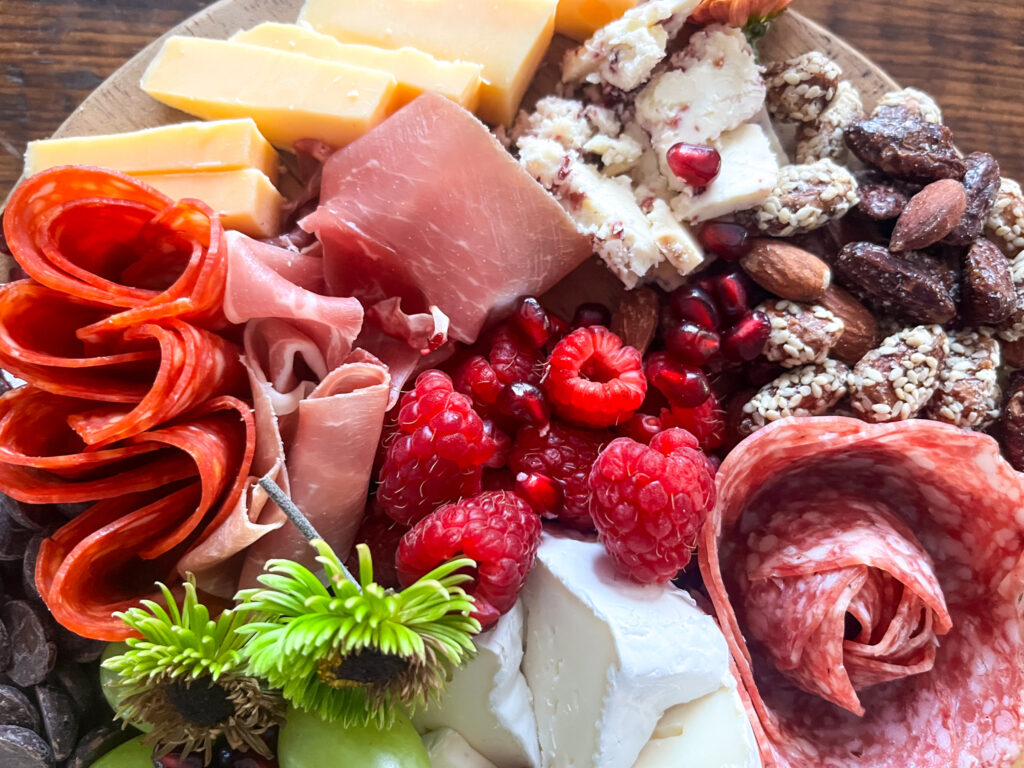
3 Cheeses Variety is the point, aim for one from each texture category. A firm aged cheddar or manchego anchors the board. A semi-soft option like gouda or havarti adds approachability. A soft, spreadable cheese — brie, camembert, or a simple goat cheese — gives guests something to reach for with bread. Three cheeses cover every preference in the room without overwhelming the board.
2 Meats One cured, one sliced. Prosciutto or speck for the delicate, paper-thin fold; a sliced salami or soppressata for something with more bite. Fold or drape them loosely, piled meat looks careless. Give each its own section of the board.
2 Extras This is where texture and color earn their keep. Marcona almonds, candied pecans, fresh grapes, dried apricots, olives, or cornichons. Choose one sweet and one briny or crunchy. These aren’t garnish, they’re palate resets between bites.
1 Dip One is enough. Honey is the most forgiving choice: it bridges salty meat, tangy cheese, and sweet fruit without competing with any of them. Fig jam works equally well. Avoid anything too sharp or overpowering on a first board.
1 Bread (or crackers) A sliced baguette, water crackers, or both. Keep it neutral. The bread carries the cheese — it shouldn’t distract from it.
How to Build It
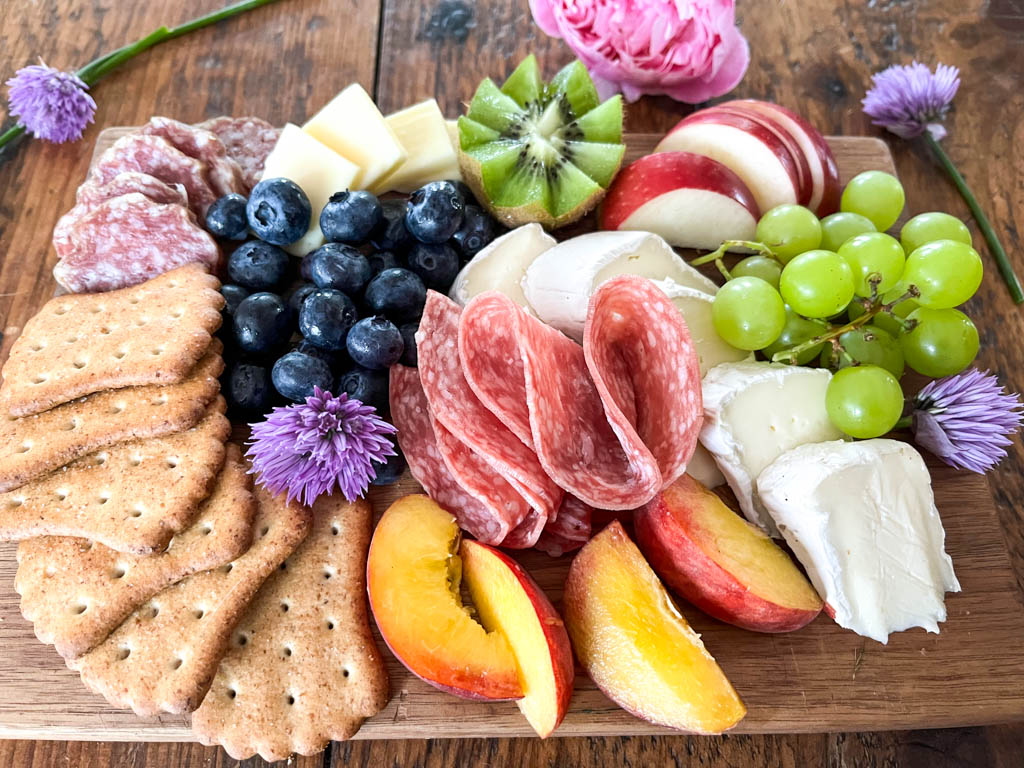
Start with your largest items: cheeses first, placed apart from each other to anchor three distinct zones. Add your meats next, folded loosely between the cheeses. Fill gaps with your extras, this is where the board starts to look full and intentional. Place your dip in a small ramekin, tuck bread and crackers along the edges, and let the board breathe. Overcrowding is the enemy of a board that photographs well and eats even better.
Room temperature matters more than most beginners realize. Pull your cheeses from the refrigerator 30 to 45 minutes before serving. Cold cheese is firm, muted, and harder to slice. Warm cheese is expressive, creamy, and ready to eat.
Three Mistakes Beginners Make
Want to get more details for making board for beginners – start with our Charcuterie 101 Guide or see ideas for good boards for beginners.
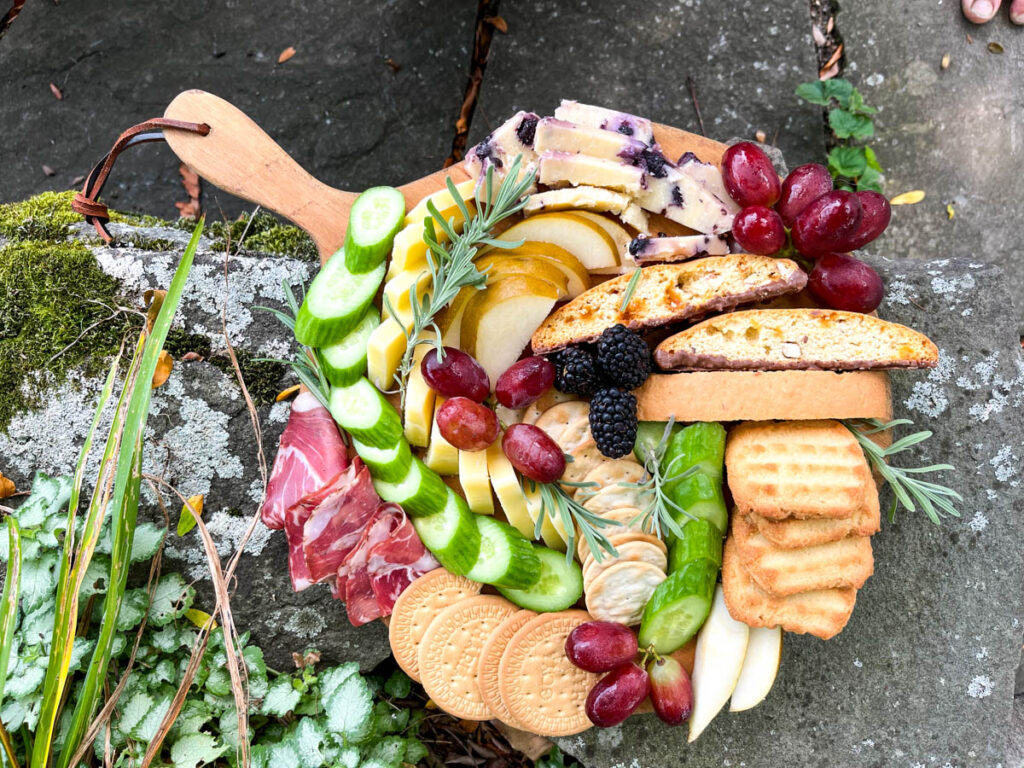
Buying everything from the same flavor family. If every cheese is mild, every meat is delicate, and your extra is a neutral cracker, the board flatlines. Contrast — sharp against creamy, salty against sweet, crunchy against soft — is what makes each component taste better.
Arranging everything too neatly. Symmetry reads as stiff. Overlap your meats. Let the grapes spill slightly. Tuck nuts into corners. A board that looks slightly abundant and casually arranged is more inviting than one that looks architectural.
Skipping the small ramekin. Pouring honey directly onto the board turns into a mess within minutes. A small dish for your dip keeps the board looking clean through the entire party — not just for the first photo.
Scale It Without Thinking
This formula scales. Hosting ten people instead of four? Double the quantities and use a larger board. Hosting two? Pull back to two cheeses, one meat, and a single extra. The ratio holds regardless of size.
The best charcuterie boards aren’t the most expensive or the most elaborate — they’re the ones built with intention. Master this formula and you’ll have a foundation you can riff on indefinitely: seasonal swaps, regional themes, dietary accommodations. But those come later. Start here.
Want more? Join our newsletter for weekly ideas and tip! All Charcuterie All the Time.