A falafel board is the kind of dinner that looks like you spent the afternoon preparing it and actually takes about 20 minutes to pull together. It’s vegetarian, endlessly customizable, and built for the table, the sort of meal where everyone reaches in, builds their own plate, and stays at the table longer than expected.
Here’s exactly how to build one.
Looking for more board ideas for dinner?
- 14 Awesome Charcuterie Board Ideas for Dinner
- 8 Amazing Dinner Board Ideas for Every Night
- 5 Mistakes that can Ruin a Charcuterie Board (and how to fix them)
Hi, I’m Gretchen - creator of Amazing Charcuterie Boards. I help home hosts and beginners create beautiful, stress-free charcuterie boards with simple rules, realistic portions, and easy styling techniques.

If you’re planning your next board, you may also find these helpful:
→ Charcuterie Board Portion Calculator
→ How to Design a Charcuterie Board (simple rules & layouts)
→ The Best Charcuterie Board Pairings

Want more board ideas and planning guides? Join my free newsletter here or search ideas.
What You’ll Need
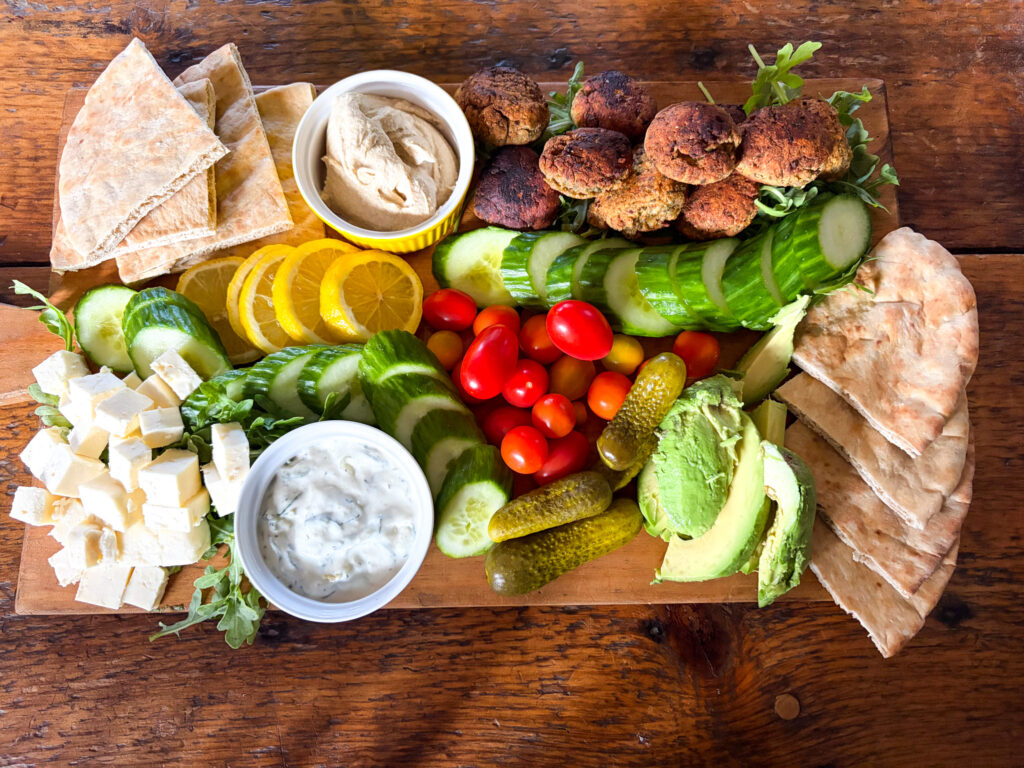
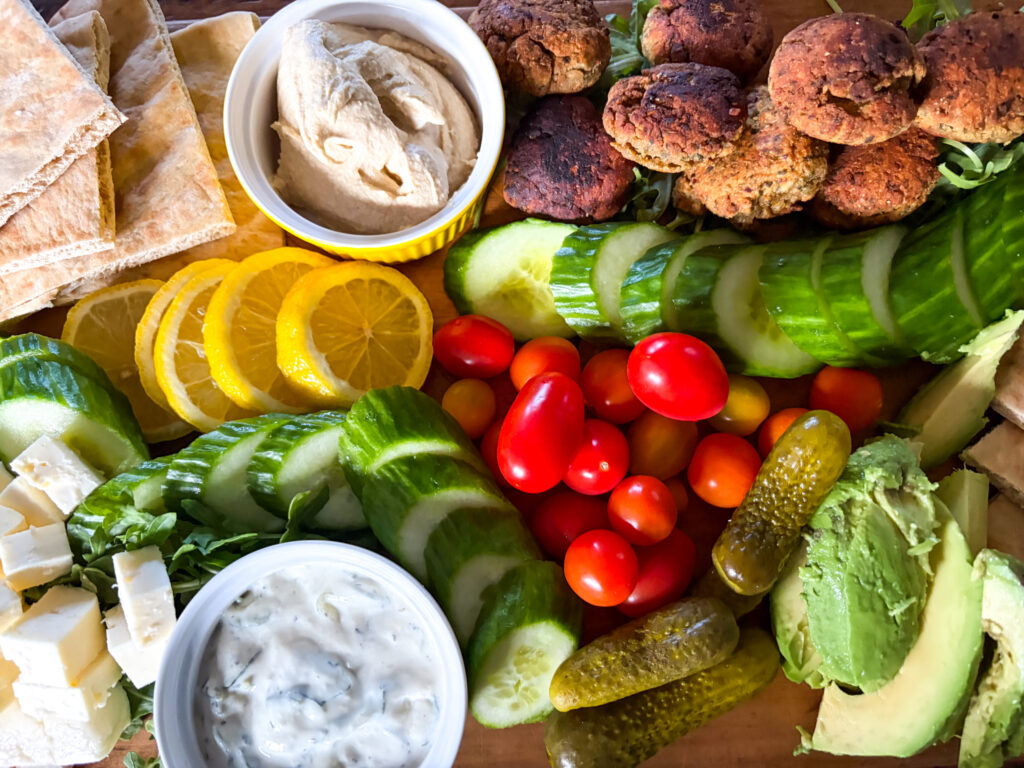
This board is built around nine ingredients, each chosen to balance richness, freshness, and brightness.
Falafel is the star. It anchors the board the way a protein anchors any dinner plate — it’s hearty, textured, and satisfying. Use store-bought for a weeknight; homemade if you have the time.
Hummus and tzatziki serve as your two dips. Hummus brings earthy depth; tzatziki brings cool, herby brightness. Together they give every bite a different direction depending on what you dip.
Feta is your cheese — sharp, salty, and crumbly. It seasons everything it touches. Crumble it loosely across the board rather than cubing it so it distributes naturally.
Avocado, sliced or fanned, adds the creamy richness that makes this board feel like a complete meal rather than a snack plate.
Cucumbers and tomatoes are your fresh elements — cool, hydrating, and the visual counterpoint to the warmer tones of the falafel and hummus. Slice cucumbers on a bias; halve the tomatoes so they’re easy to grab.
Pickles cut through the richness of the avocado and hummus with brine and crunch. They’re the palate reset between bites.
Pita bread ties it all together. Slice into triangles, toast lightly for some char if you prefer, and arrange along the edges so every seat at the table has easy access.
Additional ingredients that work well on a falafel board:
More Dips & Spreads Baba ganoush, muhammara (roasted red pepper dip), labneh, tahini sauce, harissa, olive tapenade, white bean dip
More Cheeses Halloumi (grilled or pan-seared), fresh mozzarella, kasseri, manchego
More Vegetables Roasted red peppers, artichoke hearts, sun-dried tomatoes, radishes, shredded purple cabbage, roasted beets, baby spinach, pepperoncini, kalamata olives, stuffed grape leaves
More Fresh Elements Lemon wedges, pomegranate seeds, fresh mint, fresh parsley, sliced red onion
More Bread & Crackers Lavash, naan, rice crackers, seed crackers, toasted crostini
More Protein Hard-boiled eggs, edamame, roasted chickpeas (for crunch)
More Pickled & Briny Items Pickled red onions, pickled turnips (classic mezze staple with a vivid pink color), caperberries, green olives
How to Build the Board
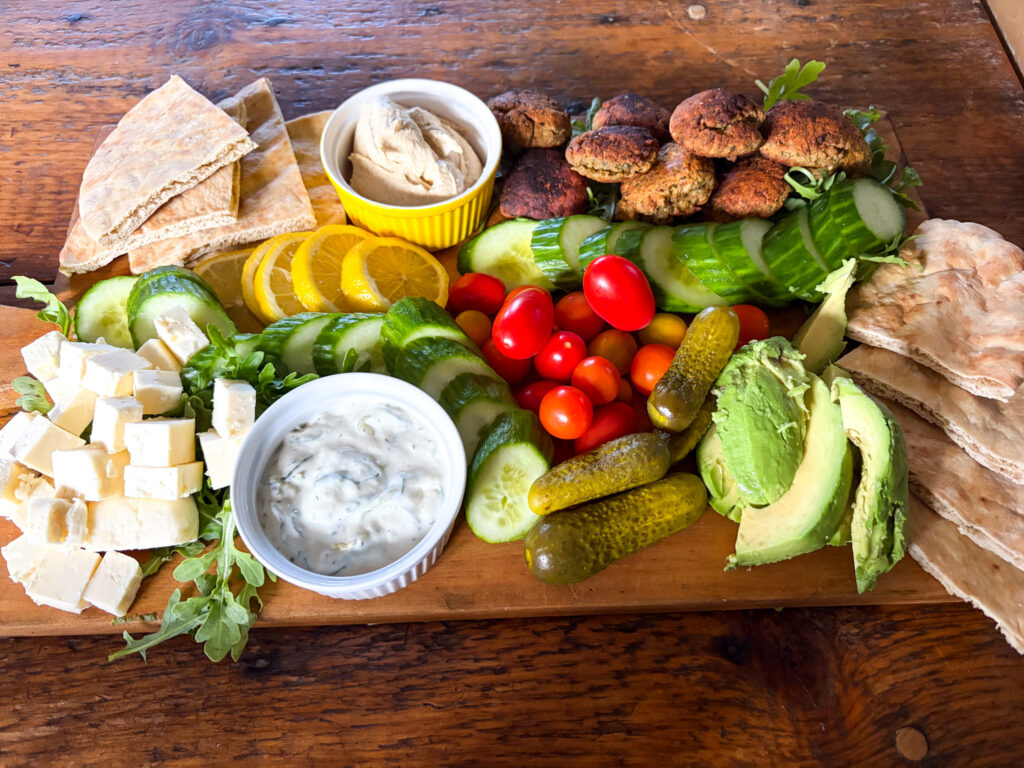
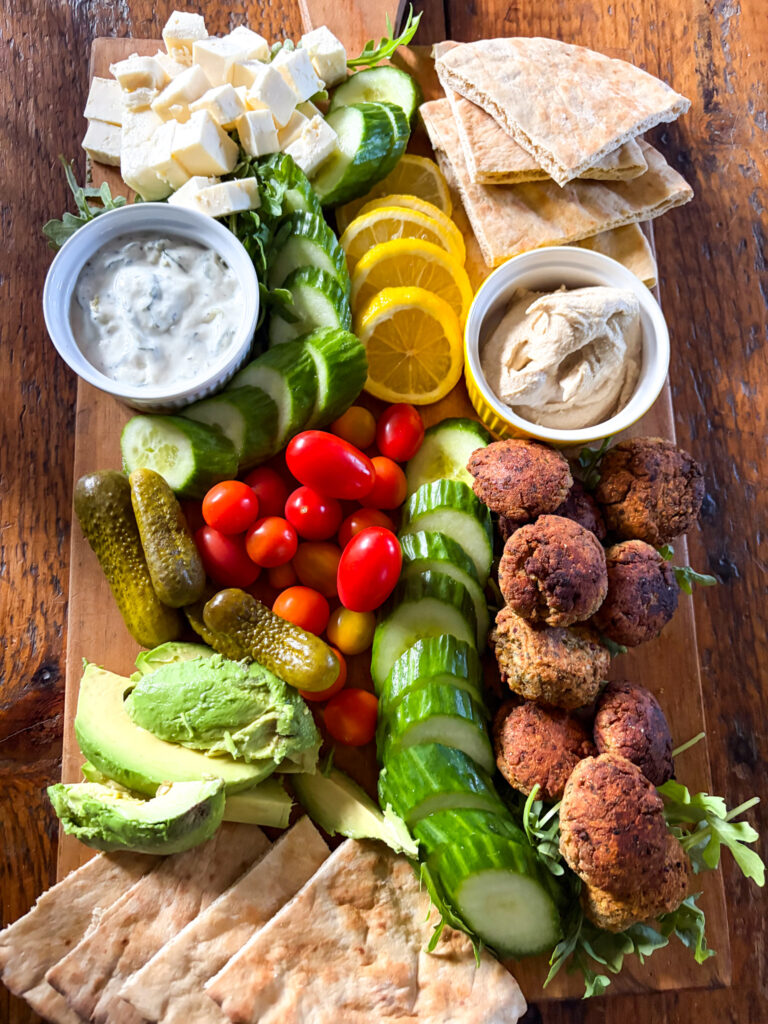
Start with your dip vessels, place hummus and tzatziki on opposite ends of the board to anchor both sides. Arrange the falafel in a loose cluster near the center; it’s your visual focal point and the ingredient guests will reach for first.
Fan the avocado slices alongside the falafel. Scatter feta crumbles across the board rather than concentrating them in one area — this way every section gets some. Fill the gaps with cucumber slices and halved tomatoes, alternating for color contrast. Add pickles in a small ramekin or tight pile to keep the brine from spreading. Finish with pita triangles along the perimeter.
The goal is a board that looks generous and abundant without feeling cluttered. Every ingredient should be reachable.
Three Tips for a Better Board
Warm the falafel right before serving. Cold falafel is dense and loses its appeal quickly. Five minutes in a 350°F oven restores the crisp exterior and soft interior. This is the single most important step for making the board feel like a real dinner.
Add the avocado last. Slice and place it as close to serving time as possible. A squeeze of lemon juice buys you a little extra time if you’re prepping ahead, but fresh is always better.
Keep the tzatziki cold until the moment you serve. Unlike hummus, which holds well at room temperature, tzatziki is noticeably better when it’s still cool. Pull it straight from the refrigerator when the board is ready to go to the table.
Why This Works as Dinner
The difference between a snack board and a dinner board is substance. Falafel provides the protein and heartiness that make this a meal. The hummus adds staying power. The avocado brings healthy fat. The fresh vegetables balance everything out.
It also scales effortlessly. Feeding two people on a weeknight? Use a small cutting board and half the quantities. Feeding eight for a casual dinner party? Double everything and use your largest board or a sheet pan lined with parchment.
Build it once and it becomes a regular in the rotation.
Love this board? You might also like my mezze board or Mediterranean Board.