A gorgeous charcuterie board doesn’t require a trip to a specialty cheese shop or a $60 grocery run. With a little strategy and the right ingredient choices, you can build a board on a budget that looks like it cost twice as much, all for under $30. This guide walks you through exactly how to do it.
The secret isn’t finding cheap ingredients. It’s knowing which ingredients give you the most visual impact and flavor for your money, how to stretch them across a beautiful board, and which shortcuts are completely invisible to your guests.
Looking for more ideas? Check out:
Hi, I’m Gretchen - creator of Amazing Charcuterie Boards. I help home hosts and beginners create beautiful, stress-free charcuterie boards with simple rules, realistic portions, and easy styling techniques.

If you’re planning your next board, you may also find these helpful:
→ Charcuterie Board Portion Calculator
→ How to Design a Charcuterie Board (simple rules & layouts)
→ The Best Charcuterie Board Pairings

Want more board ideas and planning guides? Join my free newsletter here or search ideas.
Why Budget Boards Can Look Just as Stunning
The most beautiful charcuterie boards aren’t necessarily the most expensive ones. What makes a board look impressive is color, variety, texture, and thoughtful arrangement, none of which cost extra. A $25 board with great color balance and a well-placed salami rose will always outshine a $60 board that’s just piled high with expensive ingredients.
The goal is to spend smart, not spend less on everything equally.
The Budget Board Formula
Before you shop, follow this simple formula. Every great budget board needs five things:
1 cheese · 1 meat · 1 fruit · 1 cracker · 1 filler
That’s it. One strong choice in each category gives you variety, color, and flavor without overlap or waste. Once you have your five anchors, you fill in gaps with low-cost extras from your pantry or produce section.
10 Tips for Building a Beautiful Board on a Budget
1. Choose one cheese, not three.
The biggest budget mistake is buying multiple small wedges of expensive cheese. Instead, buy one larger block of a crowd-pleasing cheese — sharp cheddar, gouda, or a creamy brie — and cut it multiple ways to create visual variety. One cheese, three shapes, looks like three cheeses on the board.
2. Skip the deli counter and buy packaged meat.
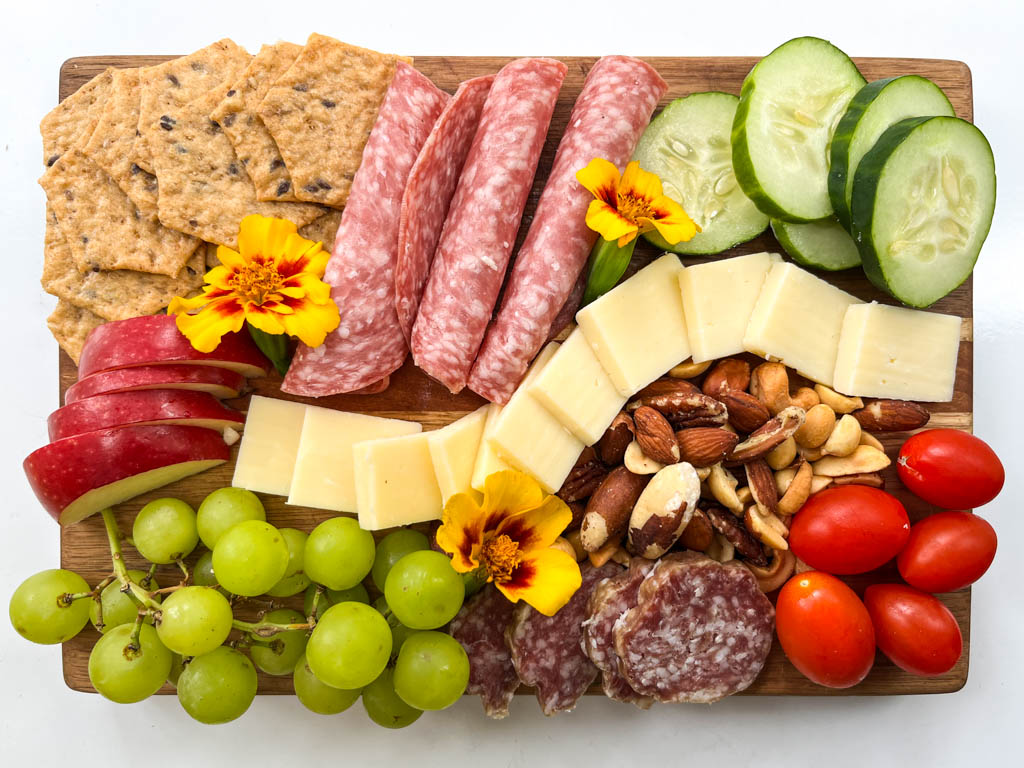
Pre-packaged salami and pepperoni cost significantly less than deli-sliced meat and taste virtually identical on a board. A $3-4 package of salami goes a long way when you fold and style each slice rather than laying it flat.
3. Buy fruit that doubles as decoration.
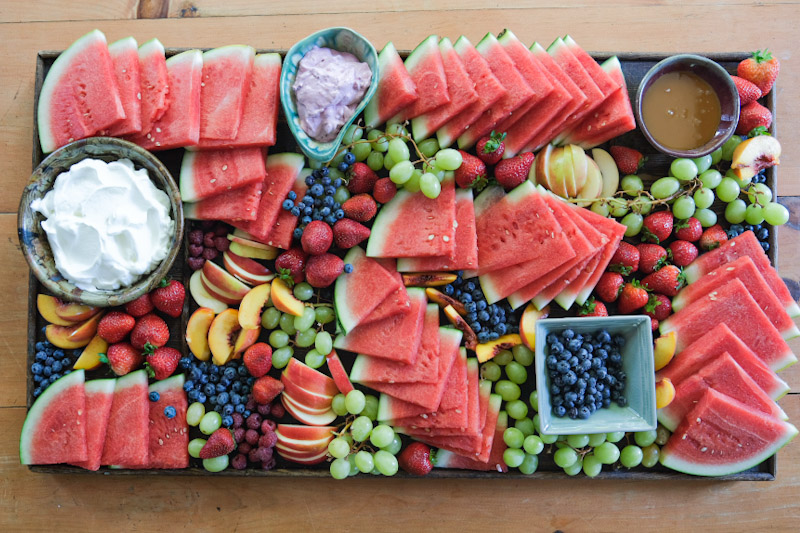
Some fruits cost very little and take up a lot of visual space on the board. Grapes are the best example — a bunch of red or green grapes costs $2-3 and fills a large section of the board beautifully. Strawberries, apple slices, and clementine segments are equally affordable and colorful.
4. Use your pantry as your filler section.
The small bowls of extras that make a board look full and intentional don’t have to come from the grocery store. Nuts, crackers, pretzels, dried fruit, jam, honey, and olives from your pantry can fill three or four spots on the board for free. Always check what you already have before you shop.
5. Buy block cheese, not pre-sliced.
Block cheese is almost always cheaper per ounce than pre-sliced or cubed varieties. Buying a block also gives you control over how it’s cut — which means you can create more visual interest by mixing slices, cubes, and wedges from the same piece.
6. Choose one showstopper and build around it.
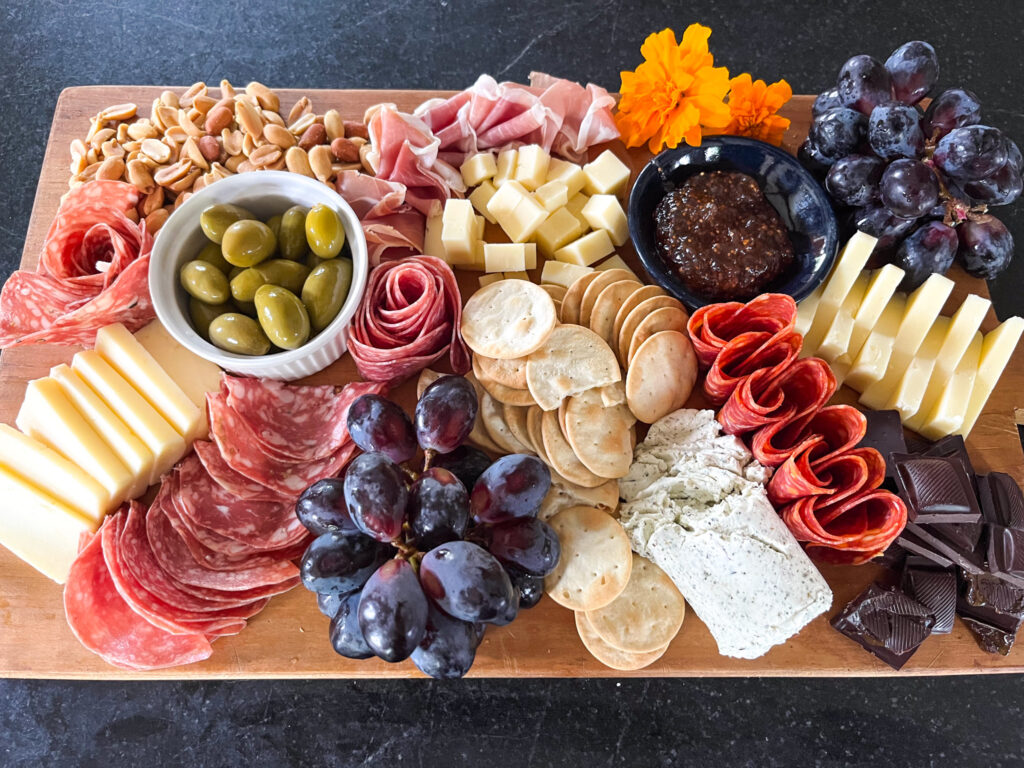
Every great budget board has one element that draws the eye — a salami rose, a wedge of brie with honey drizzled over the top, or a bunch of dark grapes cascading across the board. Spend a little extra on your one showstopper and save everywhere else. Guests will remember the wow moment, not the price per ounce of the cheddar.
7. Use crackers strategically.
A large box of water crackers or butter crackers from the grocery store costs $2-3 and fills a significant amount of board space. Arrange them in a fanned arc or a neat stack rather than scattering them randomly — the presentation makes inexpensive crackers look intentional and styled.
8. Add color with vegetables.
Cucumber slices, cherry tomatoes, baby carrots, and celery sticks cost very little and add beautiful color to any board. They also give health-conscious guests something to reach for, which makes your board feel more thoughtful and complete.
9. Make your own simple dip or spread.
A small bowl of honey, a ramekin of jam from your pantry, or a simple cream cheese mixed with herbs costs almost nothing and fills a spot on the board that would otherwise require an expensive purchased spread. Honey in particular looks beautiful, tastes great with almost everything, and costs pennies per serving.
10. Use your board size strategically.
A smaller board that looks full always looks better than a large board that looks sparse. If you’re working with a $25-30 budget, use a smaller board or cutting board and fill it completely rather than spreading thin ingredients across a large surface. A full small board reads as abundant and intentional.
What to Buy: A Sample $30 Budget Board Shopping List
Here’s an example of how to spend $30 at any grocery store and come home with everything you need for a beautiful board:
- Block of sharp cheddar or gouda — $4-5
- Pre-packaged salami — $3-4
- Bunch of red grapes — $2-3
- Strawberries (1 pint) — $3-4
- Box of crackers — $2-3
- Brie wheel (small) — $4-5
- Honey (small jar or from pantry) — $2-3
- Nuts or dried fruit (from pantry or bulk bin) — $1-2
- Cucumber or cherry tomatoes — $2
Total: $23-31 depending on store and region
That shopping list gives you two cheeses, one meat, two fruits, a vegetable, crackers, a spread, and a nut or dried fruit — everything you need for a board that looks complete and beautiful.
Budget Board Styling Tips That Cost Nothing
The way you arrange your board matters as much as what’s on it. These free styling techniques make any budget board look more expensive:
Fold your meat. Never lay salami flat. Fold each slice in half twice to create a ruffled fan shape, or roll slices into simple roses. Folded meat takes up more visual space and looks far more intentional than flat slices.
Cut your cheese multiple ways. Slice some, cube some, and break or crumble a small piece for texture. Three different cuts of the same cheese look like variety on the board.
Fill every gap. Empty space on a charcuterie board looks like you ran out of ingredients. Fill every gap with crackers, nuts, grapes, or cucumber slices until the board looks abundant.
Use odd numbers. Arrange crackers in groups of three or five, not two or four. Odd numbers look more natural and less rigid.
Add a fresh herb garnish. A sprig of fresh rosemary costs almost nothing and makes any board look like it came from a catering company. Tuck sprigs into gaps around cheese and fruit for an instant upgrade.
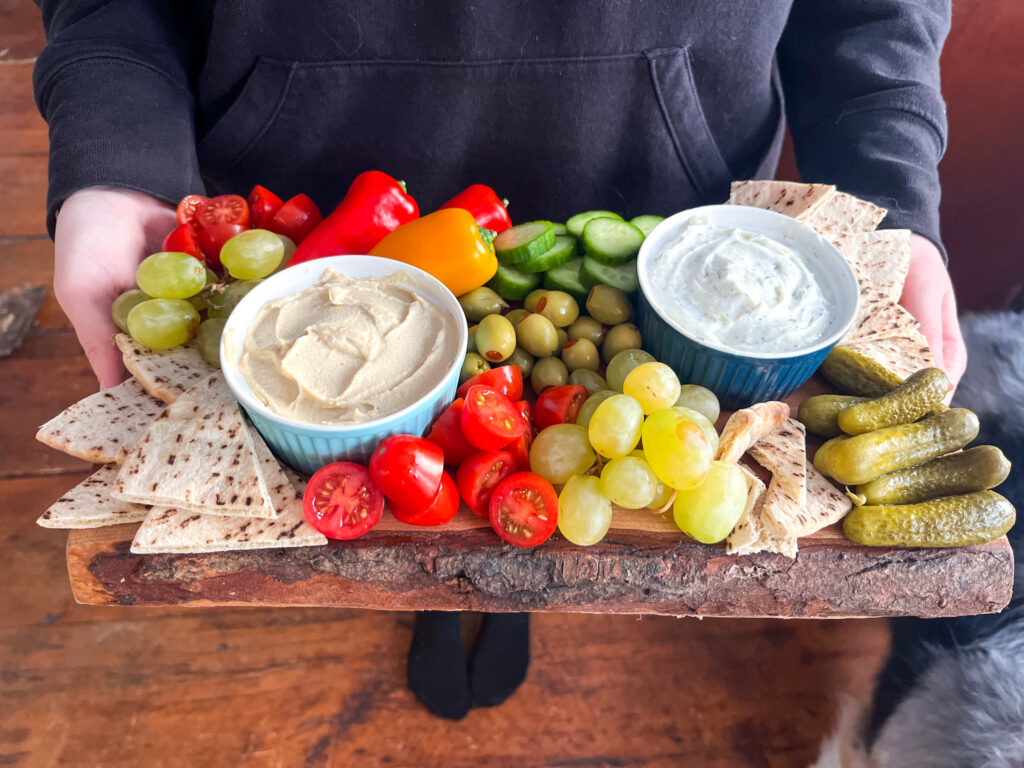
Budget Board Mistakes to Avoid
Buying too many different things in small amounts. Five half-used packages looks like a scattered grocery run. Two or three ingredients bought in the right quantity looks like a curated board.
Skipping the styling. The difference between a budget board and an impressive board is almost always in the arrangement, not the ingredients. Take an extra five minutes to fold the meat, fan the crackers, and fill the gaps.
Using a board that’s too big. Nothing makes a budget board look sparse faster than too much empty board space. Match your board size to your ingredient quantity.
Forgetting to let cheese come to room temperature. Cold cheese tastes flat. Pull your cheese out 30 minutes before serving and it will taste significantly better — for free.
More Charcuterie Board Resources
- Charcuterie Board Portion Calculator — figure out exactly how much to buy for your group size
- Aldi Charcuterie Board Under $50 — a real board built with a real budget at Aldi
- How to Make a $30 Charcuterie Board (Video) — watch the full build from start to finish
- 5 Ways to Fold Salami — free styling techniques that make any board look expensive
- Charcuterie Board Design Methods — the full guide to arranging a beautiful board every time