Good news for anyone eating gluten-free: charcuterie boards are one of the most naturally gluten-free party foods out there. Most of the best stuff on a board — the cheeses, the meats, the olives, the fruit, the nuts, has nothing to do with gluten in the first place. The challenge isn’t reinventing the board; it’s knowing where gluten hides and making smart swaps so everyone can eat freely without a second thought. Below you can see how to make a Gluten Free Charcuterie Board and 10 ideas to get you going.
Looking for more board ideas?
Part One: How to Make a Charcuterie Board Gluten-Free
Know Where Gluten Actually Hides
The obvious culprit is crackers and bread — and yes, you’ll need to swap those out. But gluten also sneaks in through some less obvious places:
Cured meats: Most salami, prosciutto, and other whole-muscle meats are gluten-free by nature, but some processed or flavored deli meats use wheat-based fillers or flavorings. Always read labels. Look for meats that list only pork (or beef), salt, and spices — nothing more.
Dips and spreads: Hummus is almost always gluten-free, but flavored dips, certain mustards, and some store-bought spreads can contain wheat starch as a thickener. Miso-based dips and soy-glazed nuts are also common culprits.
Soy sauce: If you’re putting out any Asian-inspired sauces or glazes, standard soy sauce contains wheat. Tamari is the gluten-free substitute.
Oat-based products: Oat crackers and granola often appear on boards, especially breakfast or brunch styles. Oats themselves are gluten-free, but they’re frequently processed on shared equipment with wheat. Look for certified gluten-free oats if you’re serving someone with celiac disease.
Cross-contamination: If you’re building a board for someone with celiac disease (as opposed to a gluten preference), cross-contamination matters. Use a clean board, fresh utensils, and be careful that no cracker crumbs from a separate spread end up in shared dips.
The Best Gluten-Free Cracker and Bread Alternatives
This is where most of the creative work happens. There are more options than ever:
Rice crackers: Widely available, neutral in flavor, and they hold up well under cheese and spreads. A solid everyday choice.
Seed crackers: Crackers made from flax, sunflower, and pumpkin seeds have a satisfying crunch and earthy flavor that pairs especially well with aged cheeses. Mary’s Gone Crackers is a popular brand.
Corn tortilla chips: A slightly bolder swap, but excellent with softer cheeses, salsa, and guacamole. Great for Tex-Mex or casual boards.
Cucumber rounds: Fresh cucumber slices are one of the best cracker substitutes — they’re crisp, refreshing, and add color to the board. Slice them thick enough (about ¼ inch) so they don’t flop under the weight of toppings.
Endive leaves: These boat-shaped leaves are ideal for scooping. Fill them with cheese, a drizzle of honey, and a walnut for a bite that’s as beautiful as it is delicious.
Apple or pear slices: Fruit slices do double duty as a sweet pairing and a vehicle for soft cheeses. Brie on a crisp apple slice is a classic combination.
Bell pepper strips: Adds crunch and bright color. Works especially well alongside dips like hummus or tzatziki.
Gluten-free bread or crostini: Several brands now make gluten-free baguettes and artisan-style loaves that toast up beautifully. Schar and Canyon Bakehouse are reliably good options.
Building the Rest of the Board
Once you’ve sorted crackers, the rest of a gluten-free board comes together quickly:
- Cheese: All natural cheeses are gluten-free. Processed cheese products can occasionally contain additives, but standard brie, cheddar, gouda, manchego, and blue cheese are all safe.
- Charcuterie: Stick with whole-muscle meats (prosciutto, bresaola, serrano ham) or well-labeled salami without fillers.
- Fruits and vegetables: All naturally gluten-free. Grapes, berries, figs, apples, and cherry tomatoes are all great board staples.
- Nuts: Plain roasted or raw nuts are gluten-free. Avoid seasoned or glazed nuts unless the label confirms they’re safe.
- Honey and jam: Both naturally gluten-free and essential for sweetness on any board.
- Olives and pickles: Check labels on flavored varieties, but plain olives and dill pickles are almost always safe.
Label Everything if You’re Hosting
If you’re serving guests with celiac disease or serious gluten sensitivity, a small handwritten card that says “gluten-free board” does a lot to put people at ease. It signals intentionality and saves the awkward “can I eat this?” conversation. You might also keep the gluten-free board physically separate from any boards with regular bread or crackers to avoid cross-contamination.
Part Two: 10 Gluten-Free Charcuterie Board Ideas to Try
The best part about building a gluten-free board is that most board ideas translate directly — you’re just swapping the crackers. Here are ten from Amazing Charcuterie Boards that lend themselves especially well to a gluten-free spread.
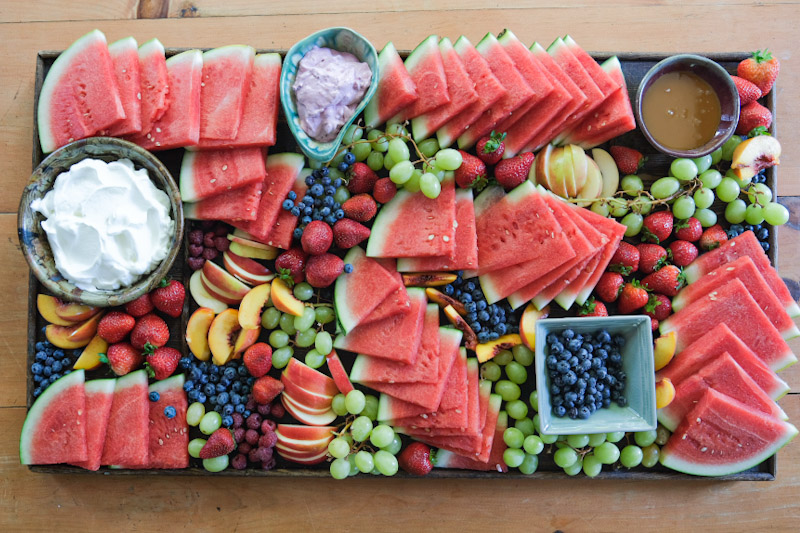
Fresh Fruit Charcuterie Board
A fruit board is one of the most naturally gluten-free options you can build. Seasonal fruit, a few soft cheeses, some honey, and maybe a handful of nuts — there’s nothing here that requires a wheat-based product. Swap any crackers for cucumber rounds or endive and you have a board that’s both stunning and completely safe.
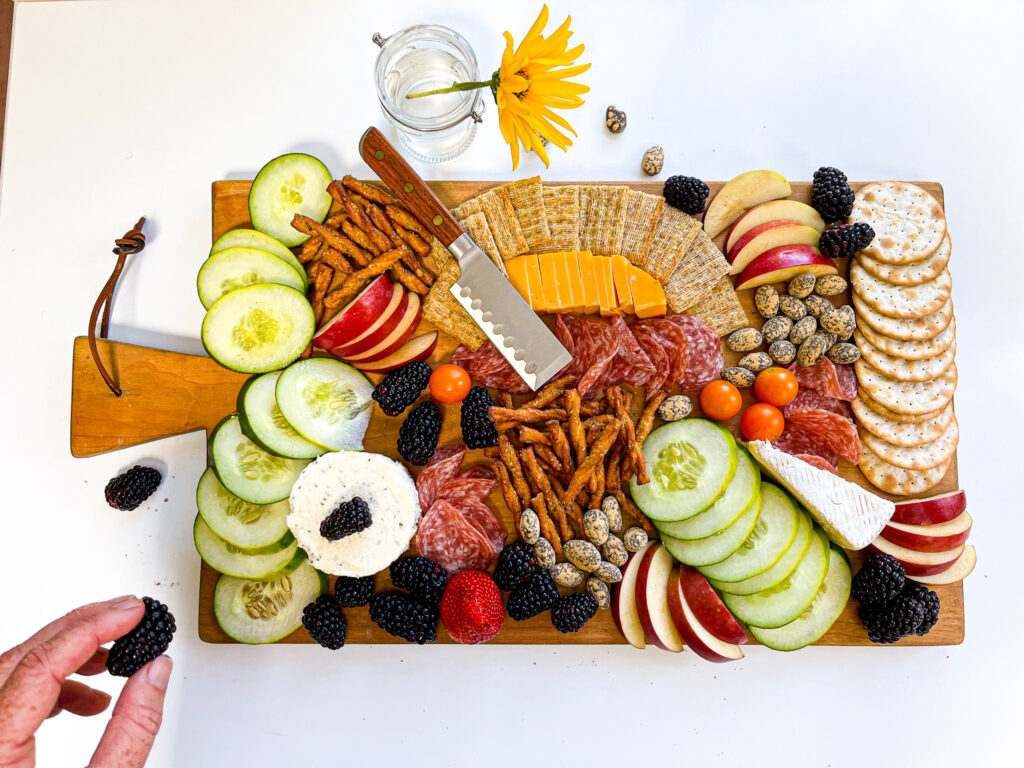
Simple Charcuterie Board
Sometimes less is more. A classic simple board — a couple of cheeses, a few meats, some fruit and olives — is easy to make fully gluten-free because there are fewer ingredients to worry about. Use rice crackers or seed crackers in place of standard wheat crackers and you’re done.
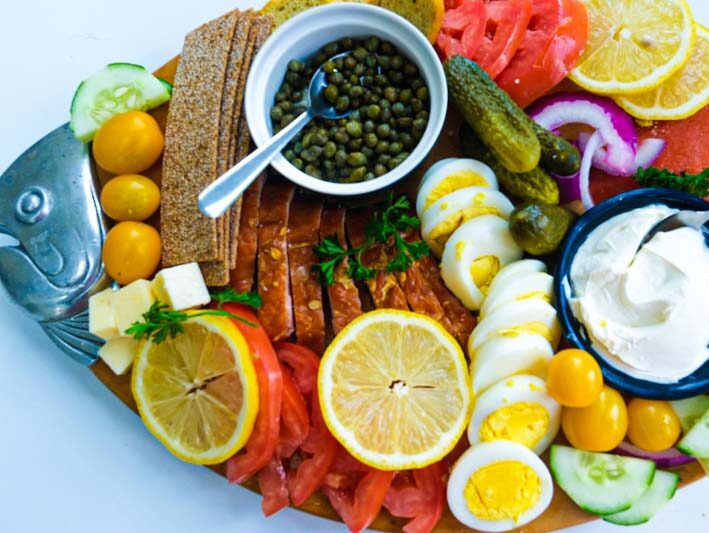
Smoked Salmon Charcuterie Board
Smoked salmon is naturally gluten-free, and this board is a natural fit for a GF crowd. Pair it with cucumber rounds (a perfect swap for blinis), cream cheese, capers, and lemon. Just double-check any packaged smoked salmon for added ingredients.
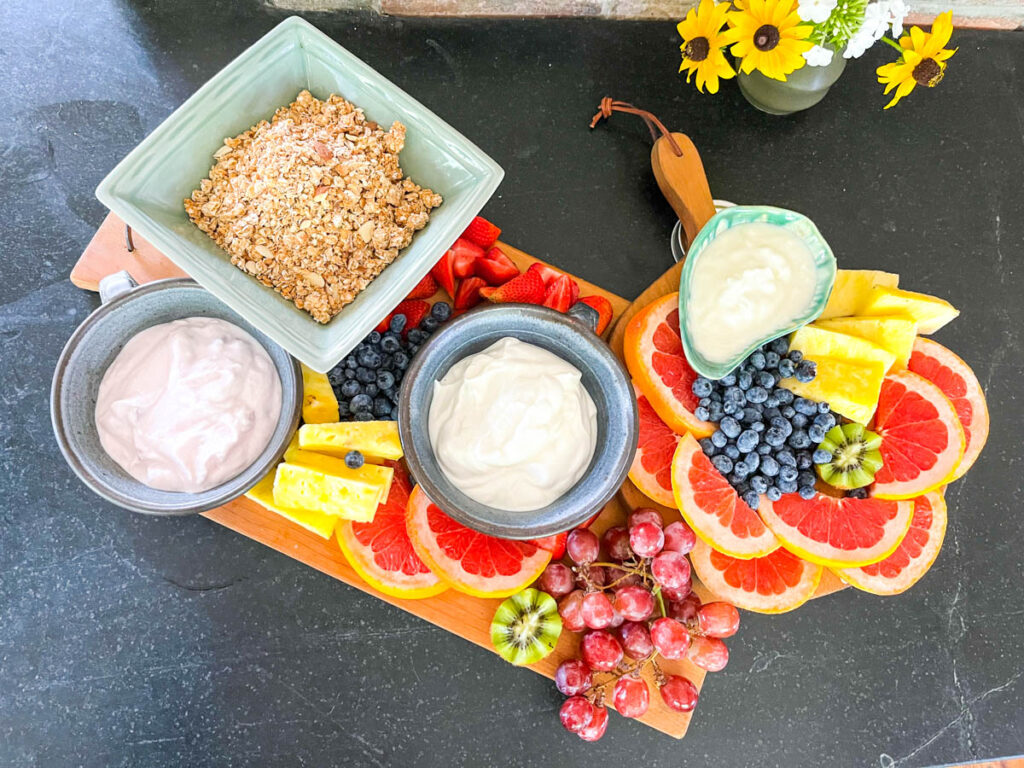
Breakfast Charcuterie Board
Breakfast boards can go fully gluten-free with ease. Think hard-boiled eggs, fresh berries, sliced fruit, yogurt, honey, and certified gluten-free granola. Skip the standard toast and replace it with GF bread or simply lean into the fresh fruit and egg-focused elements.
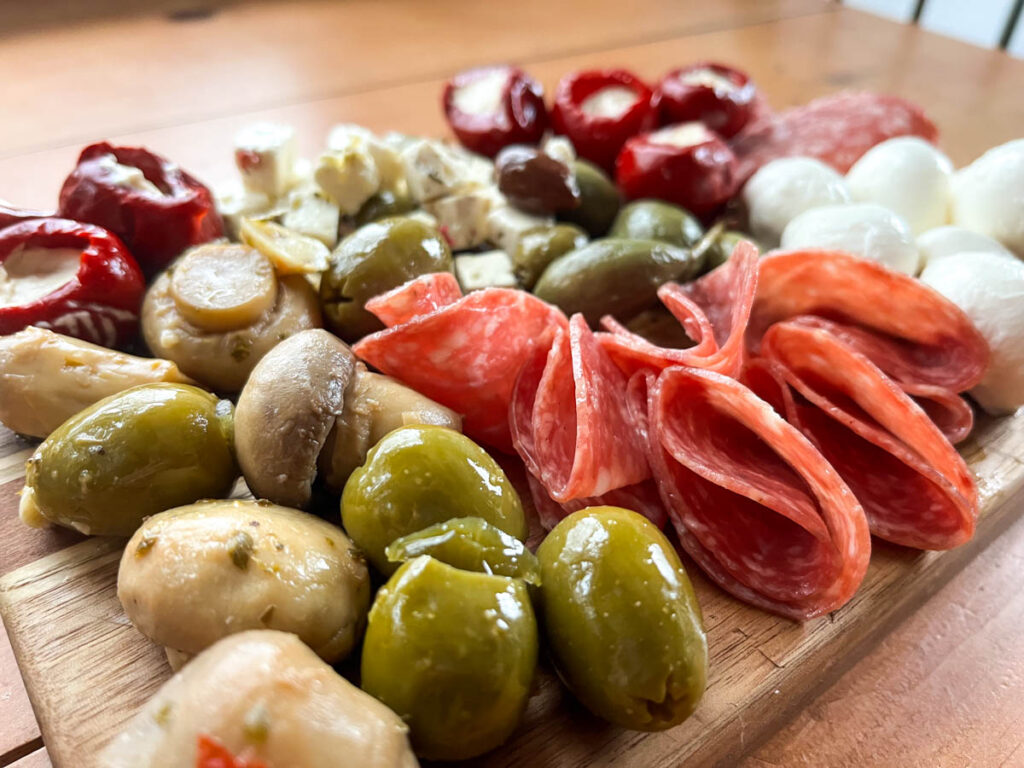
Italian Cheese Plate
Italian cheeses and charcuterie are mostly gluten-free by tradition. Parmigiano, pecorino, fresh mozzarella, bresaola, and prosciutto di Parma are all naturally safe. Use GF crostini or sliced fruit in place of bread and you have a sophisticated board that needs very little adaptation.
Healthy Kid Charcuterie Board
Kid boards are already heavy on dippable vegetables, fruit, and cheese — all naturally gluten-free. Swap wheat-based crackers for rice crackers or veggie sticks and this board works perfectly for kids who eat GF, without looking or feeling like a restricted version of anything.
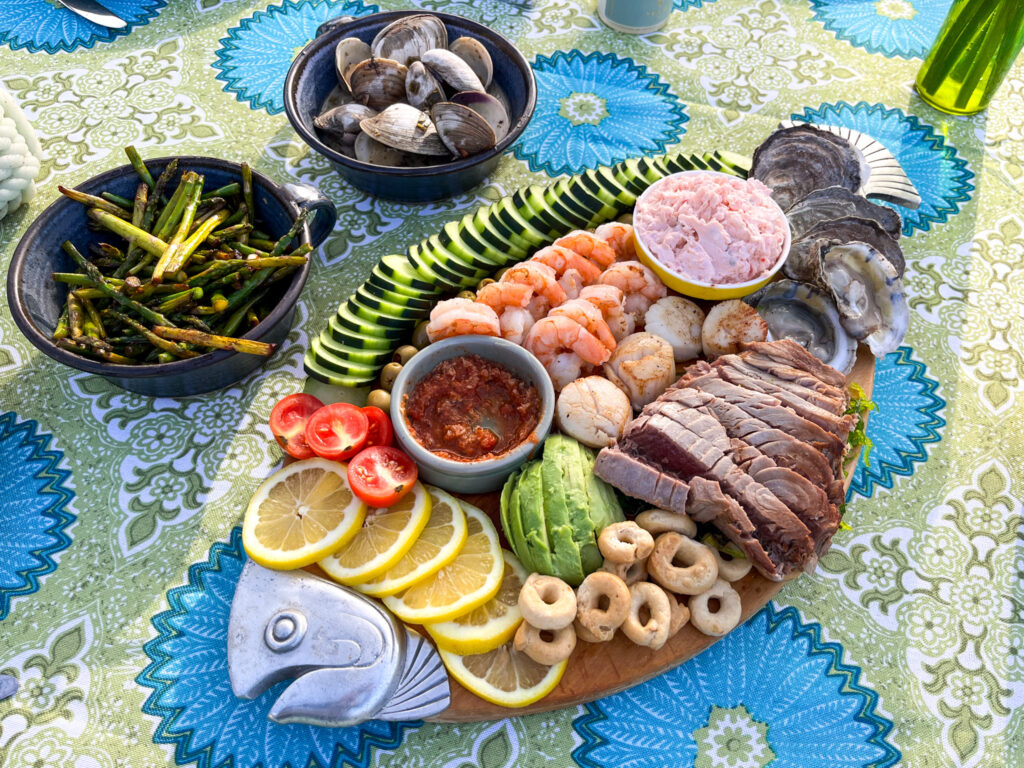
Seafood Charcuterie Board
Seafood — shrimp, crab, smoked fish, oysters — is inherently gluten-free. The main thing to watch on a seafood board is any dipping sauces (cocktail sauce is usually fine; anything soy-based needs to be tamari). Serve with cucumber, endive, and GF crackers and this board is as elegant as it gets.

Small Charcuterie Board Ideas
Smaller boards are actually easier to make gluten-free because you’re working with fewer items and have more control over every element. A two-person board with a wedge of aged cheddar, some prosciutto, grapes, a few olives, and GF crackers is a perfect simple snack or date-night appetizer.
Inexpensive Charcuterie Board Ideas
Budget boards tend to lean on seasonal fruit, store-brand cheeses, and simple meats — all naturally gluten-free. Rice crackers and seed crackers are also very affordable. Making a board GF doesn’t add cost; it just requires reading a few extra labels at the store.

Taco Charcuterie Board
A taco board is a fun dinner option that adapts beautifully to gluten-free. Use corn tortillas instead of flour, and load the board with seasoned meat, shredded cheese, pico de gallo, guacamole, black beans, and all your favorite taco toppings. It’s naturally festive and one of the easiest GF swaps on this list.
The Takeaway
Making a charcuterie board gluten-free is mostly about awareness, not restriction. The core of any great board — quality cheese, flavorful meats, fresh fruit, good olives — is already gluten-free. A few thoughtful swaps on the crackers and a label-read on any packaged ingredients is all it takes to build something everyone at the table can enjoy.