A great charcuterie board lives or dies by its cheese selection (it might also depend on a few other things – but cheese is pretty important!) Choose well, and you’ll have guests hovering around the board all evening. Choose poorly, or worse, grab whatever’s on sale, and even the most beautiful arrangement falls flat. Here’s everything you need to know to how to choose cheeses for a charcuterie board that will wow.
Looking for more? Join our newsletter or learn how to cut and style cheese.
Start with Variety, Not Just Quantity
The golden rule of cheese selection is contrast. You want a range of textures, milk types, and flavors so there’s something for every palate and every pairing. A board stacked with five variations of cheddar is a missed opportunity.
Aim for at least three to five cheeses, covering these basic categories:
- Soft and creamy — think brie, camembert, or a fresh chèvre
- Semi-firm — gouda, havarti, or fontina
- Firm or aged — aged cheddar, manchego, gruyère
- Bold or funky — a blue cheese or aged goat
Even a simple three-cheese board benefits enormously from this framework. One soft, one firm, one pungent: done.
Milk Type Matters More Than You Think
Most people shop by flavor, but milk type is one of the easiest ways to guarantee variety.
Cow’s milk cheeses are the most familiar and crowd-pleasing. Brie, gruyère, gouda, and aged cheddars all fall here. They tend to be rich and buttery, and they pair well with almost everything on a board.
Sheep’s milk cheeses like manchego and pecorino have a subtly sweet, nutty quality that’s distinct without being challenging. They’re reliably popular even with guests who claim not to like “fancy” cheese.
Goat’s milk cheeses (chèvre, aged crottin, bucheron) bring a bright, tangy acidity that cuts through fatty meats beautifully. They’re especially good alongside prosciutto and fig jam.
Blue cheeses — roquefort, gorgonzola, stilton — are made from cow’s, sheep’s, or goat’s milk, but they deserve their own category. They polarize guests, so include one if you love them, but pair it with something sweet (honey, candied walnuts, or dried fruit) to balance the intensity.
Plan for 1.5 to 2 Ounces Per Person Per Cheese
Cheese quantities trip people up constantly. A useful rule of thumb: 1.5 to 2 oz per person per cheese if it’s part of a larger spread. For a cheese-forward board that’s the main event, bump that up to 3 to 4 oz per cheese. This can change depending on the other food and whether this is a snack or a full meal.
For a party of eight with four cheeses, that’s roughly 12–16 oz total about a pound to a pound and a half of cheese. When in doubt, buy a little more. Nobody complains about leftover cheese.
Try our free Portion Calculator Tool.
Balance Flavor Intensity Across the Board
Think of your cheese selection like a playlist: you want a natural arc from mild to bold, not all bangers right out of the gate.
Build from approachable to intense:
- Mild and creamy — a fresh mozzarella or young gouda welcomes timid cheese eaters
- Nutty and medium — manchego or comté rewards those who venture further
- Sharp and complex — aged cheddar or gruyère for depth
- Bold and memorable — a blue or washed-rind cheese for the adventurous
This progression gives guests a natural tasting journey rather than a random pile of cheese.
Consider What You’re Pairing It With
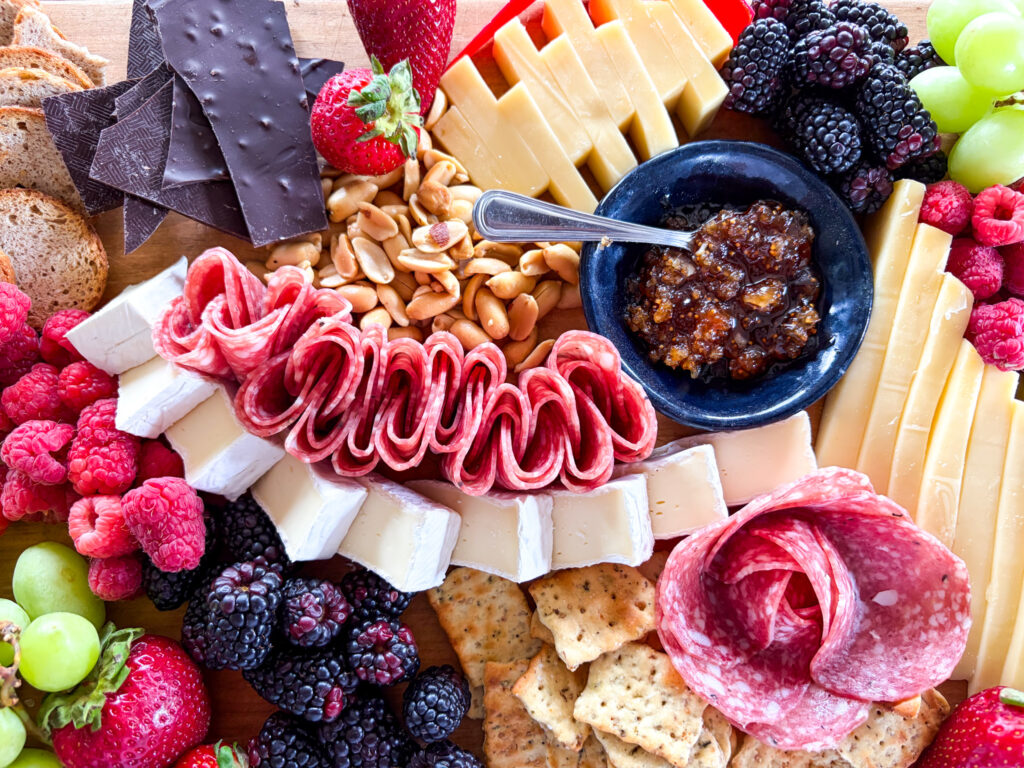
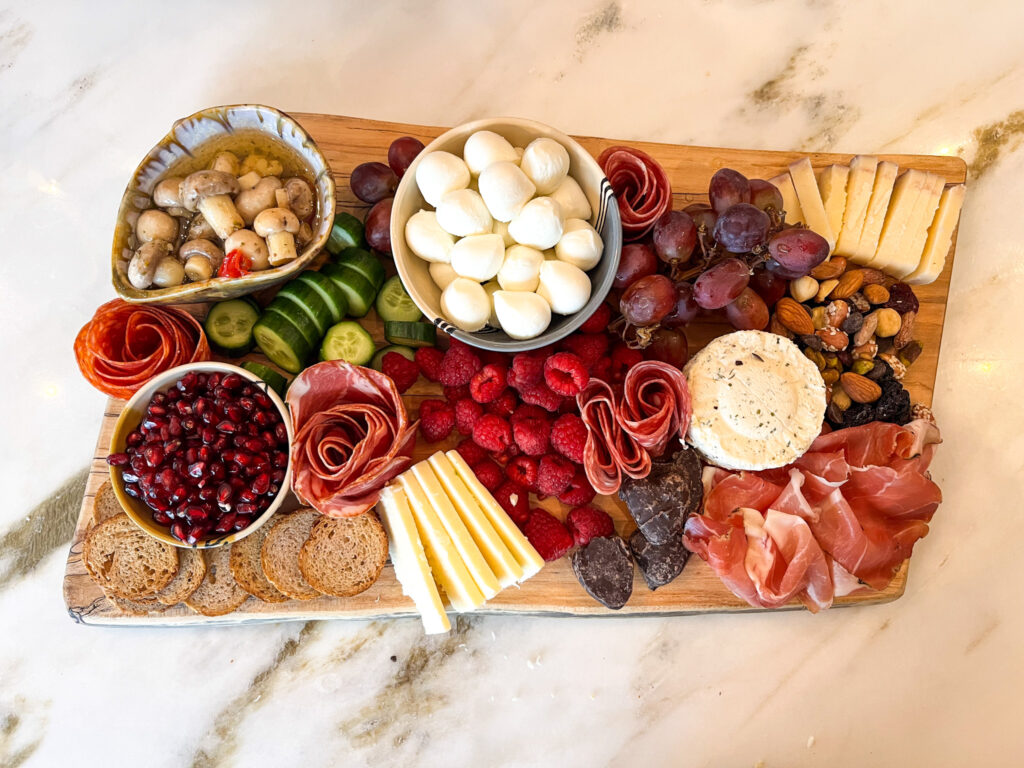
Cheese doesn’t exist in a vacuum on a charcuterie board. It shares space with cured meats, crackers, fruit, nuts, and spreads — and the best boards are designed as a system, not a collection of unrelated ingredients.
A few pairing principles to guide your choices:
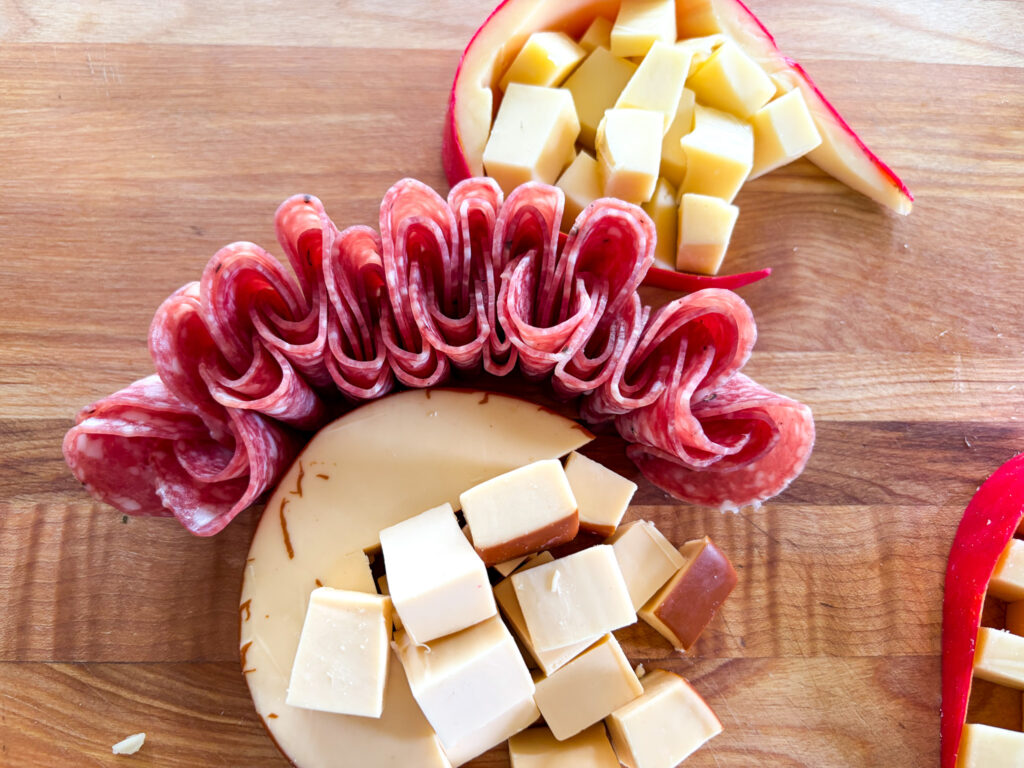
- Salty meats (prosciutto, salami) + acidic or fruity cheeses — the contrast is refreshing. A fresh chèvre or aged manchego alongside prosciutto is a classic for a reason.
- Mild meats (mortadella, turkey) + richer, creamier cheeses — brie or havarti fill in the flavor without competing.
- Spicy or boldly seasoned meats + mellow cheeses — let the meat do the talking. A creamy gouda or young fontina plays a supporting role perfectly.
- Crackers and bread — if you’re serving strongly flavored crackers (rosemary, everything seasoning), go with milder cheeses so the pairing doesn’t become a flavor collision.
Best Cheese Pairings for Charcuterie Boards
Don’t Skip the Temperature Step
This is one of the most overlooked details in cheese presentation: always bring cheese to room temperature before serving. Cold cheese is muted cheese. Most of the aromatic complexity and textural appeal of a good cheese is locked away at refrigerator temperature.
Pull your cheeses out 30 to 60 minutes before guests arrive. Soft cheeses like brie will become luxuriously spreadable; firm cheeses will open up with more pronounced flavor. It makes a noticeable difference.
A Few Crowd-Pleasing Combinations to Start With
If you’re building your first board or shopping for a mixed crowd, these combinations consistently work:
The Classic Three Brie + aged cheddar + manchego — creamy, sharp, nutty. Covers all the bases.
The Impressive Five Burrata + aged gouda + gruyère + pecorino + gorgonzola with honey — this board has a story. Every cheese is distinct, and the honey bridges the blue into something approachable.
The Crowd-Pleaser (no adventurous eaters required) Young brie + smoked gouda + havarti — mild, buttery, and universally loved. Great for kids’ parties or mixed groups.
A Final Note on Shopping
Buy from a cheesemonger if you can. Grocery store cheese sections have improved dramatically, but a good cheesemonger will let you taste before you buy, explain flavor profiles, and suggest pairings you wouldn’t have found otherwise. Tell them what you’re building and your budget — they’ll point you in the right direction every time.
And don’t be afraid to ask for a small wedge of something unfamiliar. Half the fun of a great charcuterie board is discovery.