Gouda is one of those cheeses that makes a charcuterie board feel instantly elevated. With its rich, buttery flavor, satisfying firmness, and gorgeous golden rind, it’s as beautiful to look at as it is to eat. Whether you’re building a casual snack board or an elaborate grazing table, knowing how to cut and style gouda properly can transform it from a simple slice into a true centerpiece.
In this post, we’re diving into four different ways to cut and present gouda, each one suited to a different board style, occasion, or aesthetic. But first, let’s talk about why gouda deserves a permanent spot in your cheese rotation.
Looking for more ideas? How to Cut Brie for a Board (and 4 Ways to Style it)
Hi, I’m Gretchen - creator of Amazing Charcuterie Boards. I help home hosts and beginners create beautiful, stress-free charcuterie boards with simple rules, realistic portions, and easy styling techniques.

If you’re planning your next board, you may also find these helpful:
→ Charcuterie Board Portion Calculator
→ How to Design a Charcuterie Board (simple rules & layouts)
→ The Best Charcuterie Board Pairings

Want more board ideas and planning guides? Join my free newsletter here or search ideas.
Why Choose Gouda for Your Charcuterie Board
Gouda is a crowd-pleaser for good reason. Here’s why it earns its place on the board every time:
Flavor that works for everyone. Young gouda is mild, creamy, and slightly sweet — approachable even for guests who aren’t adventurous cheese eaters. Aged gouda deepens into caramel, butterscotch, and nutty notes that serious cheese lovers will gravitate toward. You can even put both on the same board for a built-in flavor journey.
A texture that cuts beautifully. Gouda holds its shape when sliced, cubed, or broken — which means it looks intentional and polished on the board rather than crumbly or messy.
That iconic look. The natural or wax rind, the pale golden interior, the firm edges — gouda has visual character that photographs well and draws the eye on a spread.
Versatility across board styles. Whether you’re doing rustic farmhouse, modern minimalist, or holiday-themed, gouda fits in without clashing.
4 Ways to Cut Gouda and Style it on a Board
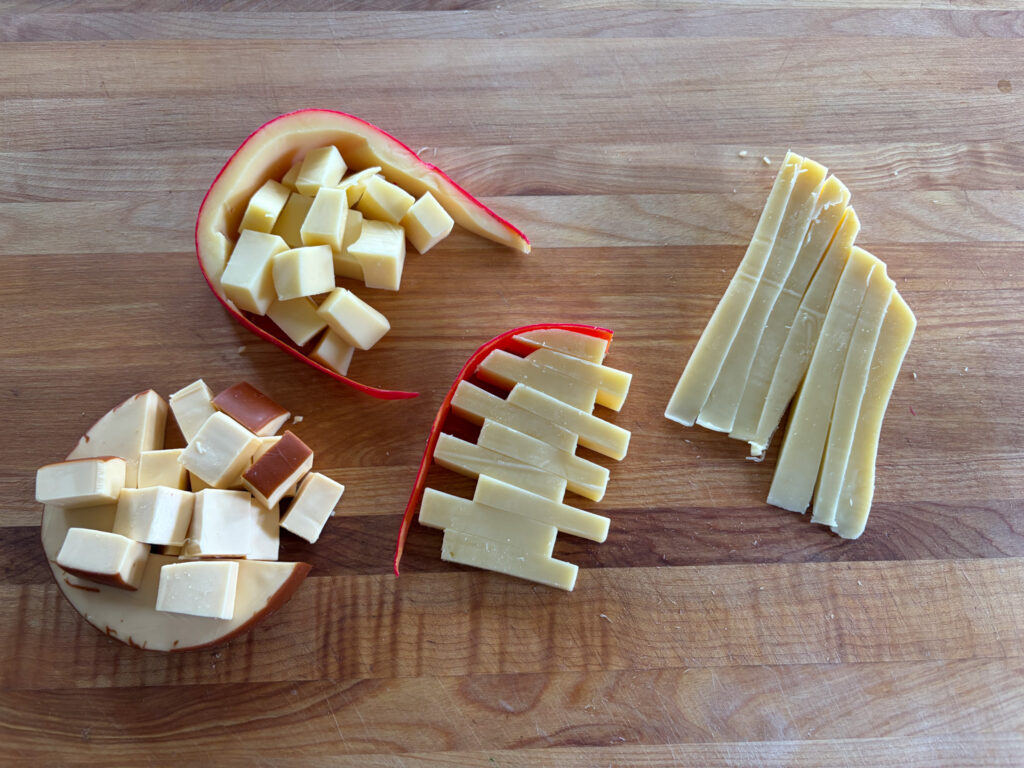
There are many ways to cut and style gouda – here are 4 of my favorites.
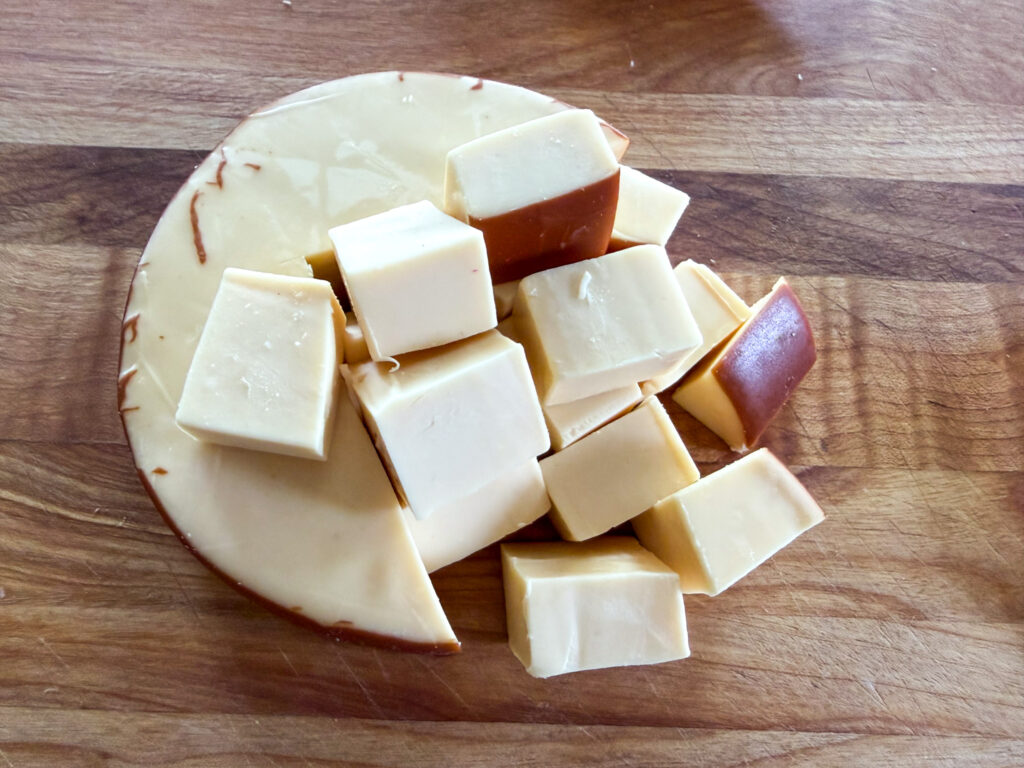
Round Packman
This is a great way to cut gouda is you have a small round. Start by cutting a packman shape. Cut the extra piece into cubes and then pile the cubes up inside the packman.
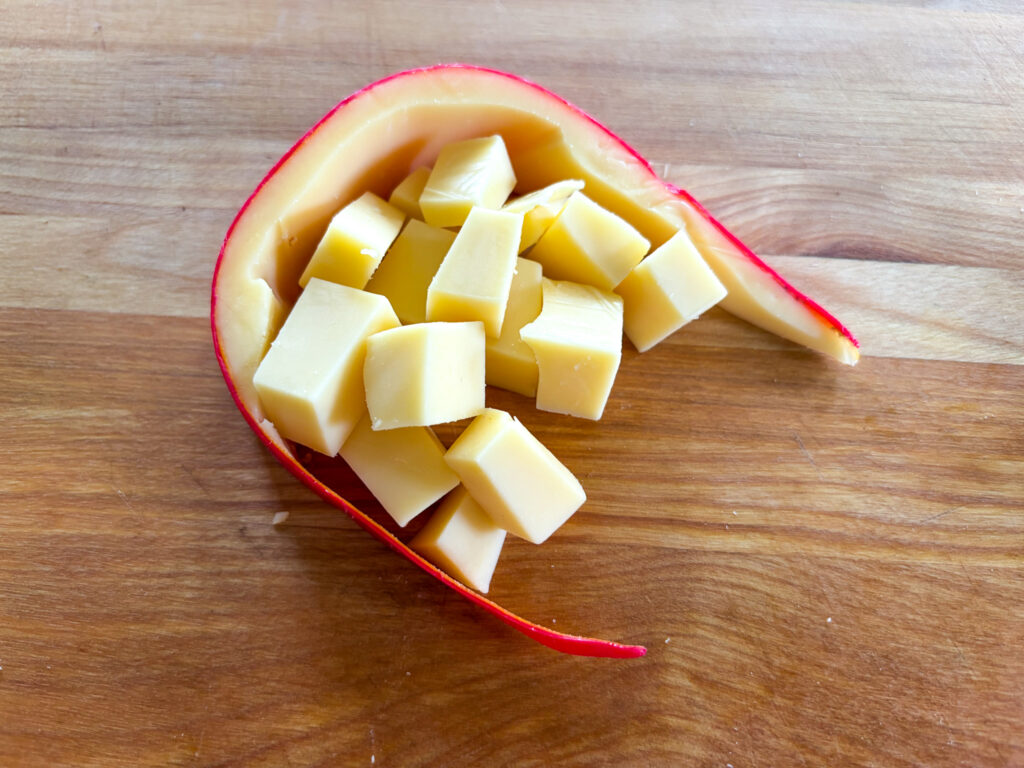
Cubes in the Wax
Cut the wax off the gouda leaving some on the wax rind. Cut the cheese into cubes and pile them inside the rind.
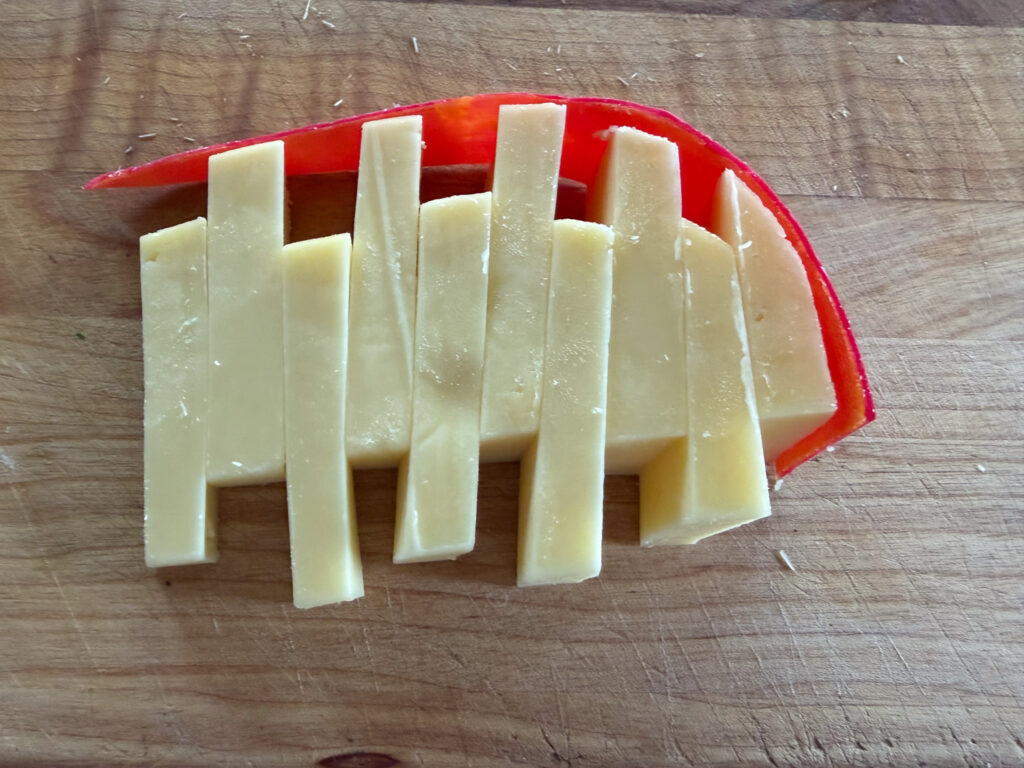
Staggered Slices
Cut your wax rind off the cheese and cut the cheese into slices. Stagger the cheese slices and put them back inside the rind.
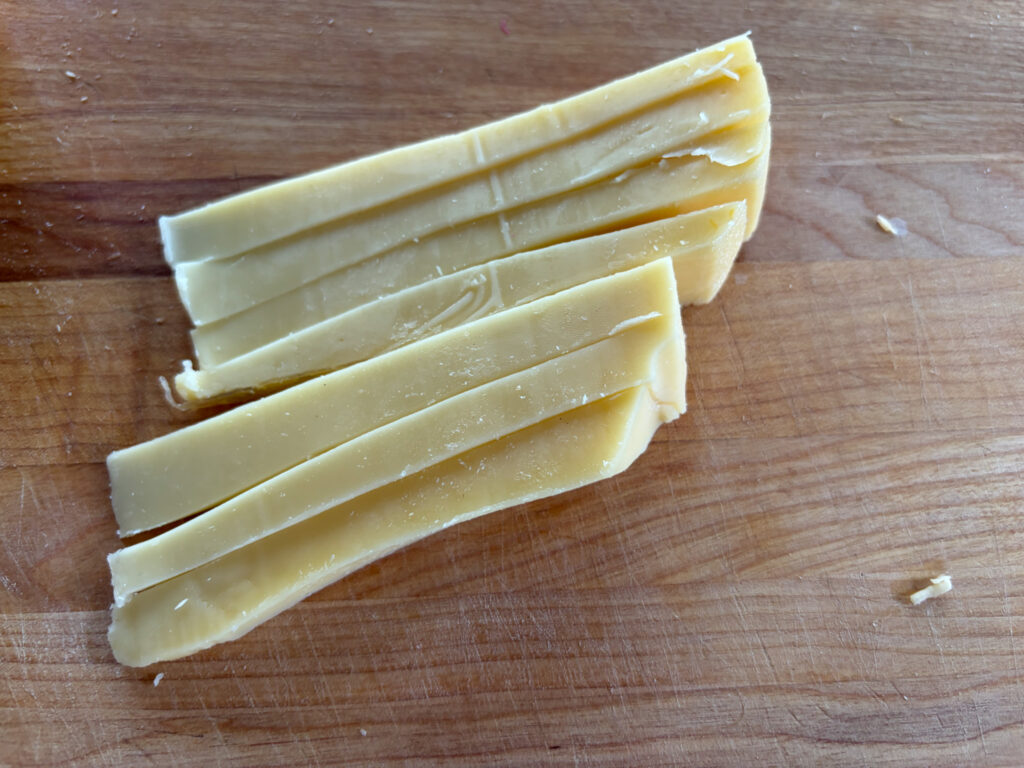
Long Wedges
Cut off the wax and then slice your cheese in long triangles. Lay these out creatively on the charcuterie board.
What to Pair with Gouda
Gouda plays well with a wide range of accompaniments. Here are some go-to pairings to build around:
Meats: Prosciutto, soppressata, and smoked salami all complement gouda’s richness. For aged gouda especially, a slice of speck or bresaola alongside it is a natural match.
Crackers & Bread: Opt for something with a little substance — a seeded cracker, a thin sourdough crisp, or slices of toasted baguette. Gouda can handle more than a plain water cracker.
Sweet accompaniments: Honeycomb is a classic pairing with aged gouda. Fig jam, apricot preserves, or a few dried cranberries also echo the caramel notes in older varieties.
Fresh & pickled elements: Sliced pears or green grapes add brightness and cut through the fat. Cornichons or pickled mustard seeds bring a tangy contrast that keeps each bite interesting.
Nuts: Marcona almonds, candied walnuts, or spiced pecans alongside gouda add crunch and round out the board’s texture.
Shopping Tips: What to Look for at the Store
Not all gouda is created equal, and knowing what to look for makes a big difference in how your board comes together.
Age matters. Labels like young, aged, or extra-aged (sometimes old or overjarig on Dutch imports) signal very different cheeses. Young gouda (a few months old) is supple and mild. Aged gouda (1–2 years) is firmer with complex flavor. Extra-aged (3+ years) is deeply caramel-forward and slightly crystalline — almost like a savory toffee.
Look for Dutch imports. Gouda from the Netherlands — especially wheels stamped with PDO (Protected Designation of Origin) certification — tends to have more authentic, nuanced flavor than mass-produced domestic versions. Brands like Beemster, Reypenaer, and Marieke Gouda are widely available and worth the slight premium.
Wheel vs. wedge vs. sliced. If you’re cutting and styling it yourself (which this whole post is about!), buy a wedge from the cheese counter rather than pre-sliced. You’ll have more control over presentation, and the cheese stays fresher longer once you cut it yourself.
Check the rind. A natural rind (brownish, sometimes with a little mold or cloth impression) usually signals an artisan or aged wheel. A red or yellow wax rind is typical of younger, commercially produced gouda — still great for boards, just a different product.
Don’t skip the specialty aisle. Many grocery stores now carry smoked gouda alongside standard varieties. Smoked gouda adds a whole other flavor dimension and visual contrast (darker exterior, cream interior) that works beautifully on a board.