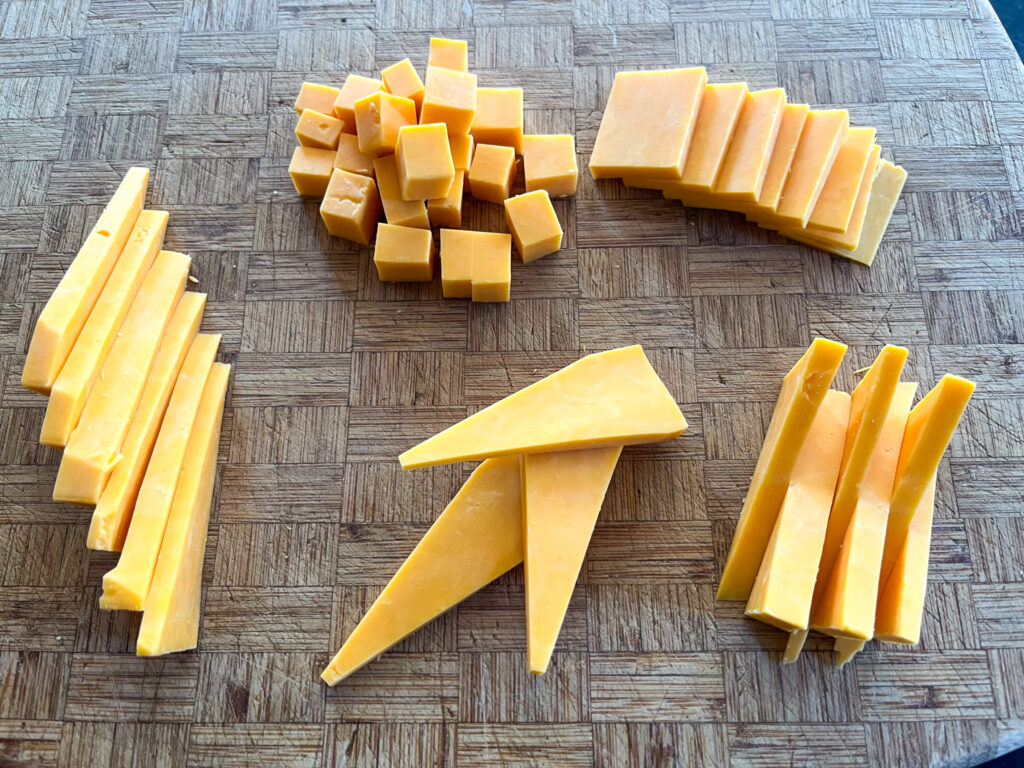
In this article I’m sharing 4 ways to cut block cheese for a charcuterie board. This could also be an article about how to cut cheddar cheese for a board since cheddar is a nice soft cheese and easy to work with. I’ll also share a few ways to style cheddar for a board once you’ve cut it.
One of my favorite ways to save money on a board (but still have it look fancy) is to cut block cheese in a few different ways – this makes it look like you have more types of cheese for the board.
Note that this works best with a store bought standard cheddar block – fancy cheddar cheese is often crumbly (and delicious) but can be difficult to cut with these methods.
You can see more of the best cheese for a charcuterie board.
Hi, I’m Gretchen - creator of Amazing Charcuterie Boards. I help home hosts and beginners create beautiful, stress-free charcuterie boards with simple rules, realistic portions, and easy styling techniques.

If you’re planning your next board, you may also find these helpful:
→ Charcuterie Board Portion Calculator
→ How to Design a Charcuterie Board (simple rules & layouts)
→ The Best Charcuterie Board Pairings

Want more board ideas and planning guides? Join my free newsletter here or search ideas.
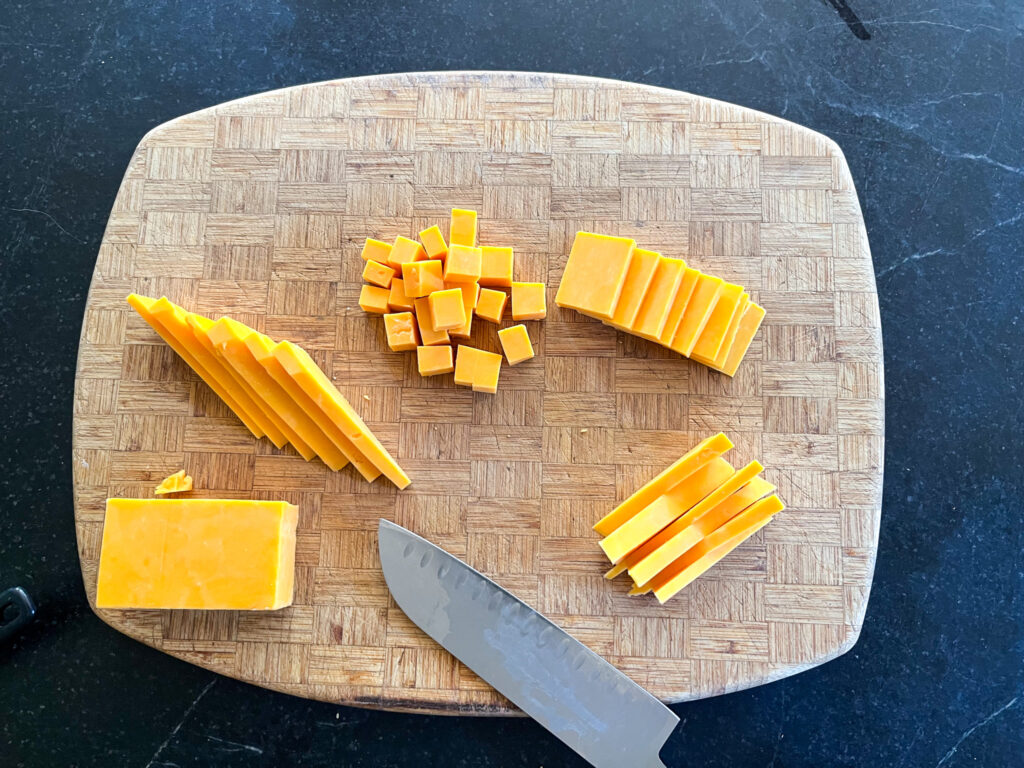
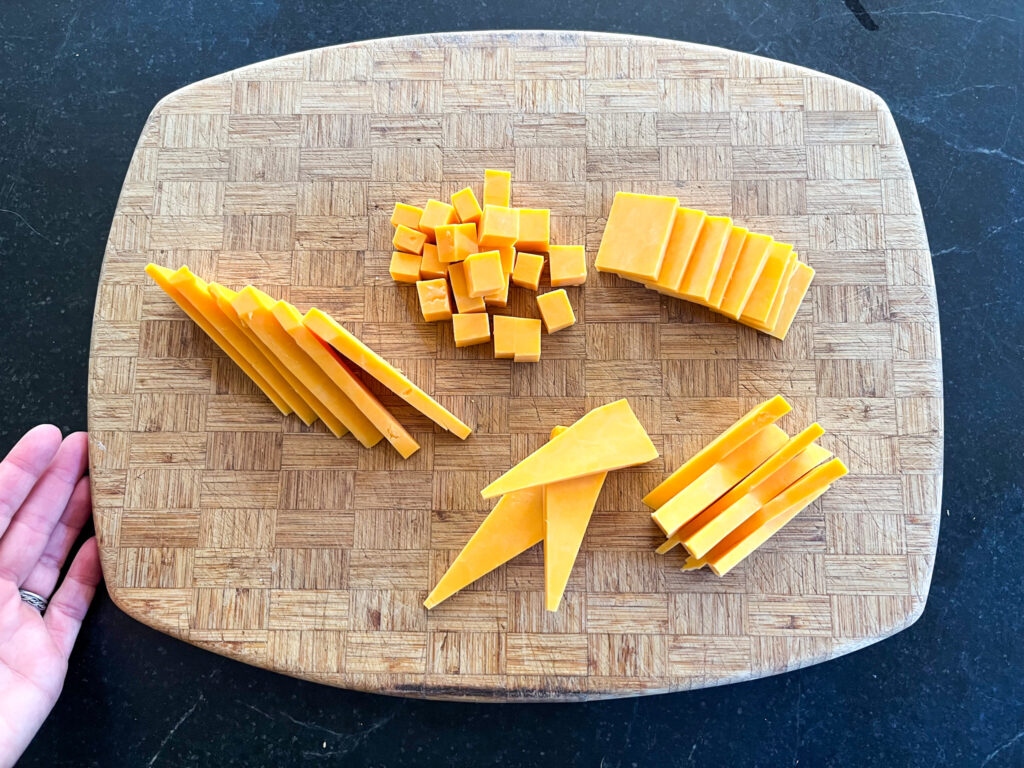
4 Ways to Cut Block Cheese
1. Slices
Best for: Semi-hard cheeses like cheddar, gouda, or Colby jack.
Slicing cheese into thin or medium-width pieces is one of the easiest and most classic ways to prepare it. Slices are perfect for layering with crackers or meats and are easy for guests to grab. For a more refined look, fan the slices out or stack them slightly overlapping.
2. Wedges
Best for: Firm or aged cheeses like Manchego, Parmesan, or aged cheddar.
Cutting cheese into wedges gives your board a rustic, artisanal feel. Start by cutting the block in half, then slice each half diagonally into smaller wedges. This works especially well if you want to show off a cheese’s natural texture or rind.
3. Cubes
Best for: Mild, snackable cheeses like cheddar, pepper jack, or Swiss.
Cubes are a fun and practical option, especially for casual boards or kid-friendly spreads. To cut cubes, simply slice the cheese into even slabs, then turn and cut crosswise to create bite-sized pieces. For visual interest, you can mix different colored cheeses together in a small bowl or scatter them across the board.
4. Triangles
Best for: Soft to semi-soft cheeses like Havarti or Monterey Jack.
Triangles are a nice in-between option that feels playful but still elegant. To make triangles, slice the cheese block into rectangles, then cut each rectangle diagonally. This shape adds a geometric contrast and pairs nicely alongside round crackers or fruit slices.
Watch the Video How to Cut Block Cheese for a Charcuterie Board
How to Select Cheese for Your Charcuterie Board
Choosing the right cheeses is one of the most enjoyable parts of creating a charcuterie board. The key is to offer a mix of flavors, textures, and colors so every guest can find something they love. Aim for a balance between mild and bold, soft and hard, familiar and adventurous.
1. Include a Variety of Textures
Try to include at least one cheese from each category:
- Soft: Brie, Camembert, or goat cheese – creamy and spreadable.
- Semi-soft: Havarti, Fontina, or Gouda – smooth and mild.
- Semi-hard: Cheddar, Gruyère, or Provolone – great for slicing and layering.
- Hard: Parmesan, Manchego, or aged Asiago – firm with concentrated flavor.
Mixing textures not only gives your guests options but also makes your board visually more interesting.
2. Play with Flavor Profiles
Combine mild cheeses with stronger varieties to keep things balanced. For example, pair a classic cheddar with something tangy like blue cheese or something nutty like aged gouda. Sweet additions like fruit or honey can help mellow out stronger cheeses.
3. Choose a Few Different Milk Types
If you want to get a little more creative, try adding cheeses made from different kinds of milk — cow, goat, and sheep — for a wider range of flavors. Goat cheese adds a tangy brightness, while sheep’s milk cheese brings a rich, buttery depth.
4. Think About Color and Shape
A visually appealing board has a mix of colors and shapes. Choose cheeses that contrast — white brie, orange cheddar, yellow gouda — and cut them in different ways (slices, cubes, or wedges) to make the board look full and inviting.
5. Add a Local or Seasonal Touch
If possible, include at least one local or seasonal cheese. Not only does this make your board more personal, but it’s also a great way to support local producers and start a conversation around the table.
Looking for more ideas? Get our Newsletter.