If you’ve only ever thought of charcuterie as an appetizer, it’s time to upgrade. A well-built board can absolutely stand in for dinner, no entrée required. The secret isn’t piling on more meat and cheese. It’s balance: the right mix of components so the board actually fills you up and feels like a meal, not a snack plate. The dinner board formula makes it easy!
We’ve already shown you how good this can look with our dinner board — and if you want proof that a board can flex into full-on comfort food or dinner-party territory, our chili board and smoked salmon board are two of our most popular “this is actually dinner” builds.
So what turns a snacky spread into a real meal? It comes down to five components.
The 5-Part Formula
1. Protein Base
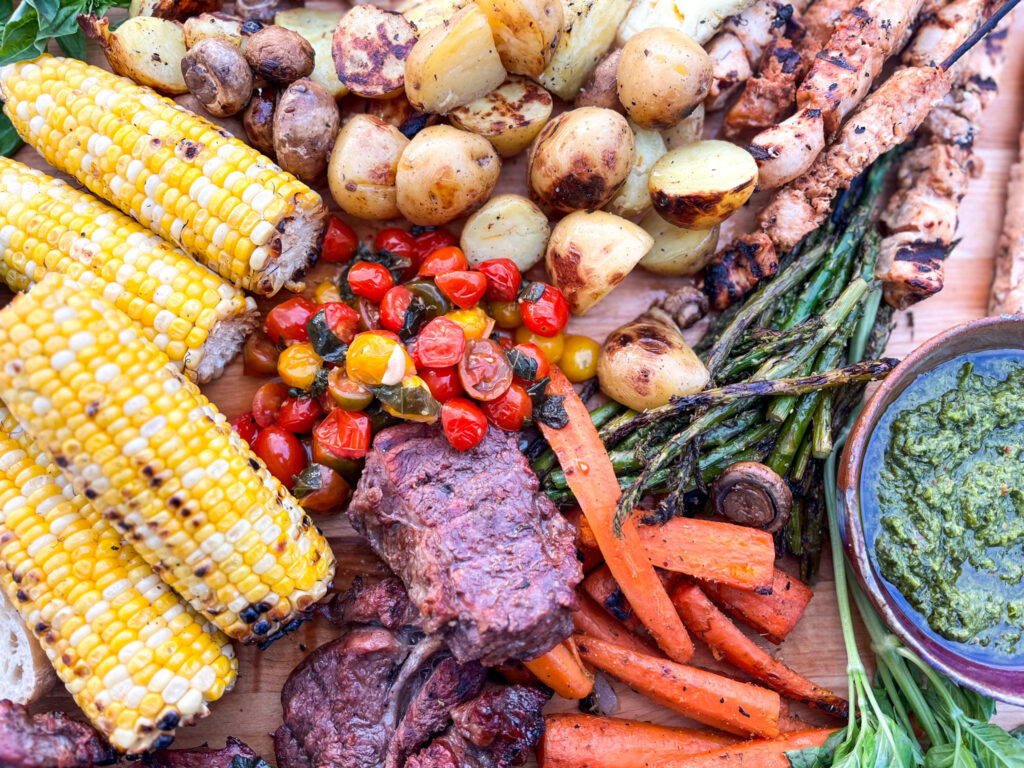
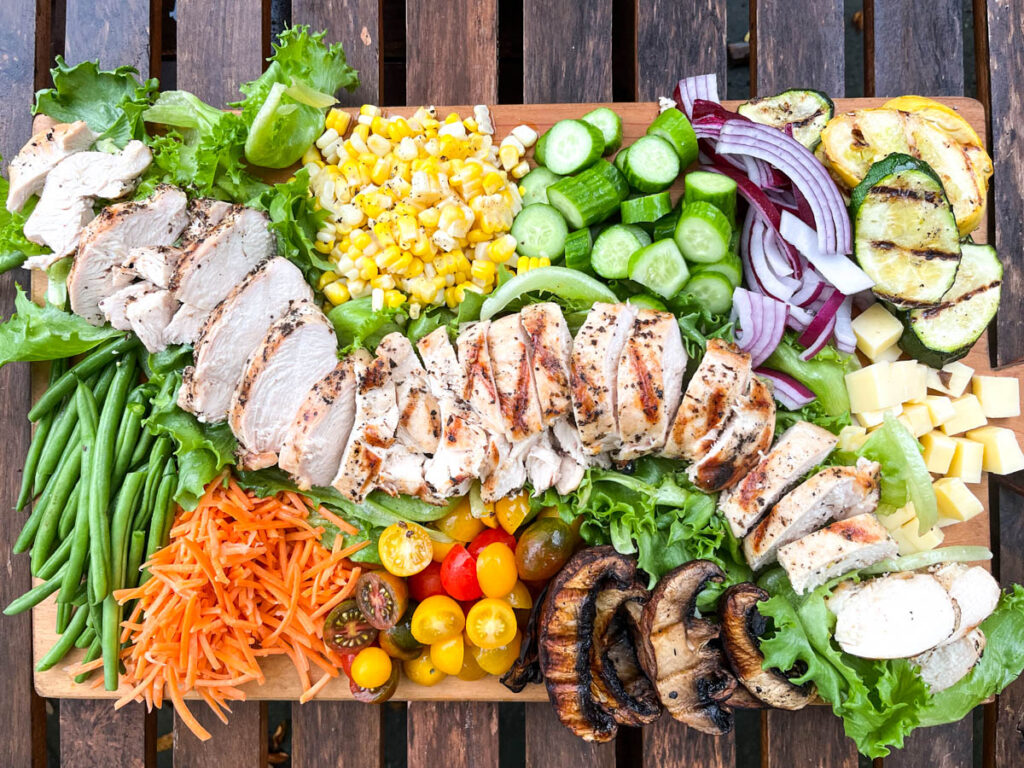
This is your anchor: the part that makes the board filling instead of just decorative. Think beyond the usual cured meats. A dinner board benefits from heartier proteins: sliced roasted chicken or steak, meatballs, shredded pork, poached shrimp, or a good smoked salmon. The goal is enough protein that someone could make a full plate from this section alone.
2. Filling Sides
This is where you build actual substance and prevent the “still hungry an hour later” problem. Roasted potatoes, a grain salad, marinated beans, roasted vegetables, or a hearty pasta salad all work. These sides do the heavy lifting that fruit and crackers can’t — they add volume, nutrients, and staying power.
3. Warm Item
The single easiest way to make a board feel like dinner instead of a snack tray: add something warm. A small cast-iron dish of baked brie, warm meatballs, a mini casserole, or a bowl of chili (yes: this is exactly why the chili board works so well) instantly shifts the whole vibe from “grazing” to “sit-down meal.”

4. Dip
A great dip ties the whole board together and gives people a reason to combine elements instead of eating them one at a time. Go beyond hummus — a warm spinach dip, a punchy aioli, a whipped feta, or a smoky romesco all add richness and make the bread and vegetables feel essential rather than filler.
5. Bread
Don’t treat bread as an afterthought. For a dinner board, think beyond crackers: a crusty baguette, warm naan, garlic bread, or soft dinner rolls. Bread is what turns “a bunch of ingredients on a board” into something people can actually build bites — or full sandwiches — from.
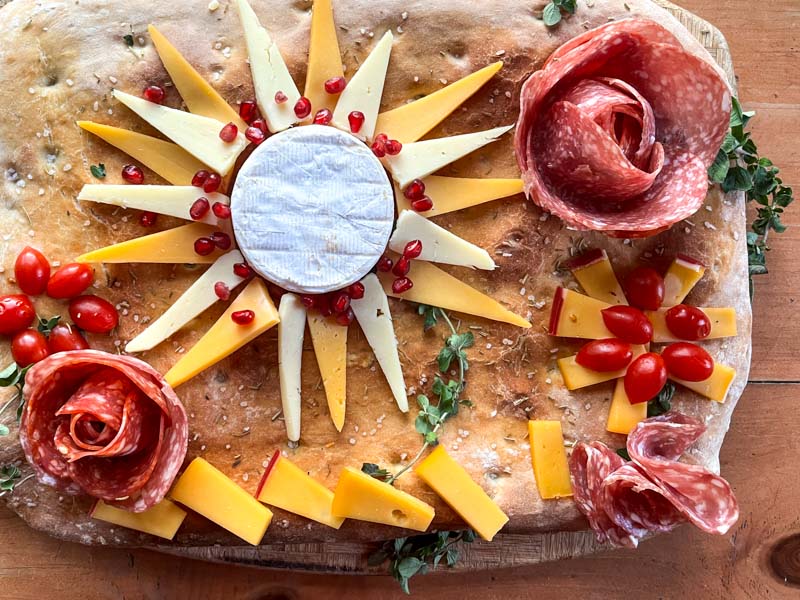
Putting It Together
Once you’ve got all five elements, arrange them so the eye (and the fork) naturally moves around the board: warm items near the center where they’ll get attention first, protein and sides in generous clusters, dip in a bowl people can reach from multiple angles, and bread within arm’s reach of the dip.
The result is a board that doesn’t just look like a meal — it eats like one.
Want more ideas? Join our weekly newsletter.