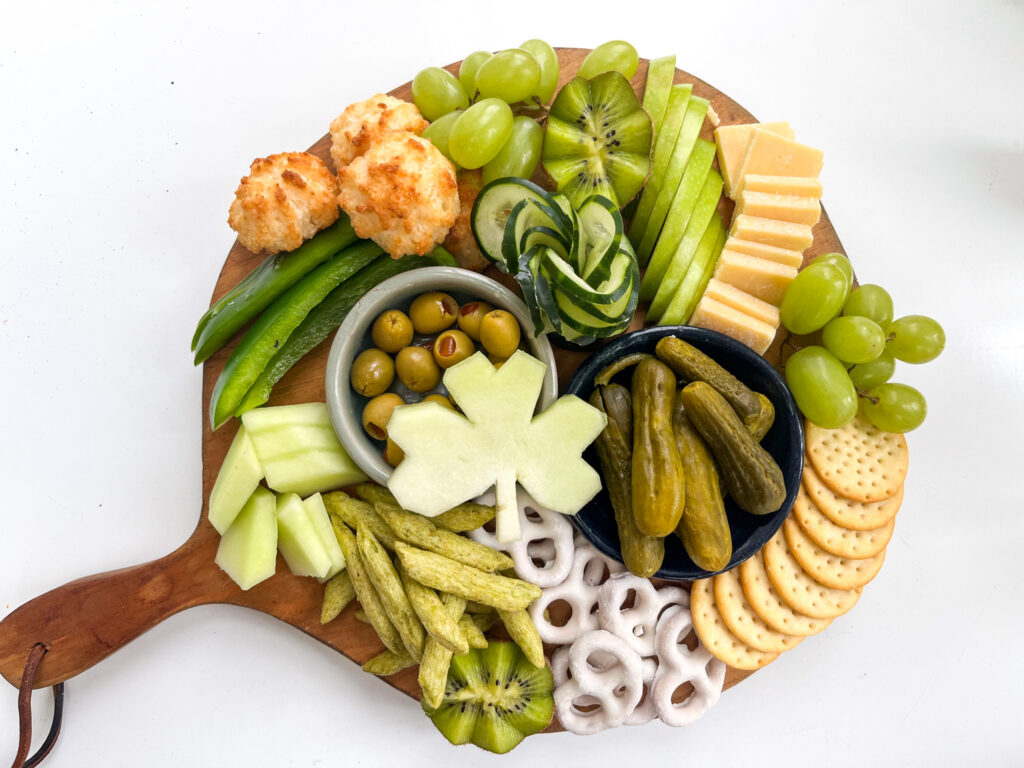
Have you ever built a board, stood back to look at it, and thought… something’s off, but I can’t tell what?
Nine times out of ten, it’s this: you piled all of one ingredient in one spot instead of spreading it around.
That’s where the Rule of 3 for charcuterie comes in. It’s one of the simplest styling tricks I use on every single board, and it makes an immediate difference in how “finished” and professional your board looks — without adding a single extra ingredient.
Hi, I’m Gretchen - creator of Amazing Charcuterie Boards. I help home hosts and beginners create beautiful, stress-free charcuterie boards with simple rules, realistic portions, and easy styling techniques.

If you’re planning your next board, you may also find these helpful:
→ Charcuterie Board Portion Calculator
→ How to Design a Charcuterie Board (simple rules & layouts)
→ The Best Charcuterie Board Pairings

Want more board ideas and planning guides? Join my free newsletter here or search ideas.
What is the Rule of 3 for Charcuterie Boards?
The Rule of 3 is a styling principle, not an ingredient list. It has nothing to do with how many cheeses or meats you buy — that’s what the 3 3 3 3 Rule is for.
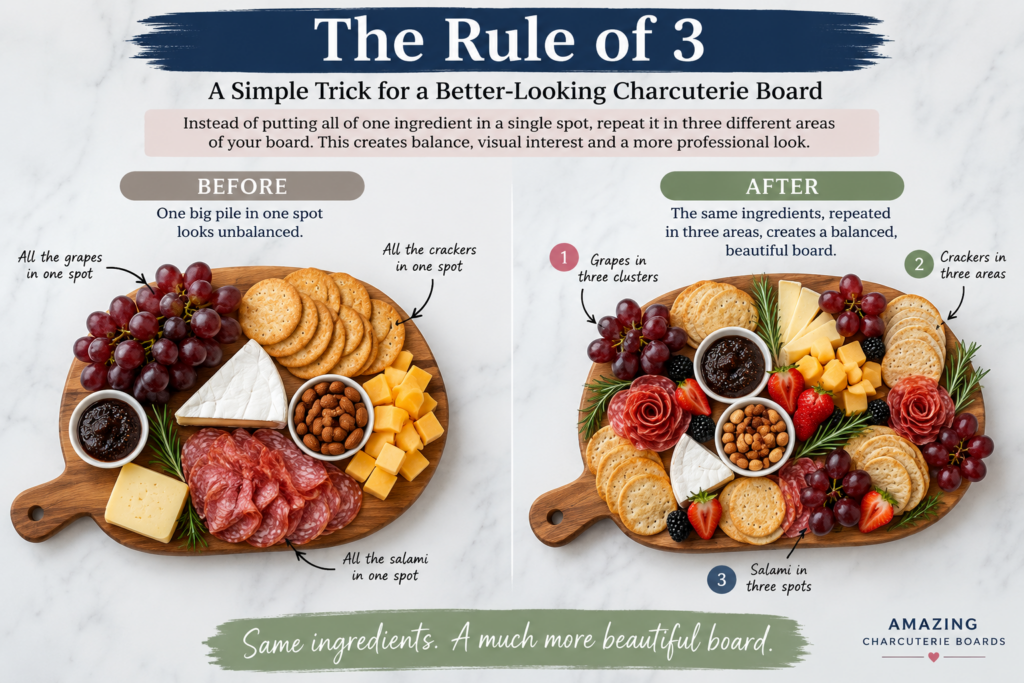
The Rule of 3 is about placement: repeat your key ingredients in three different spots around the board instead of grouping all of one thing together in a single pile.
So instead of:
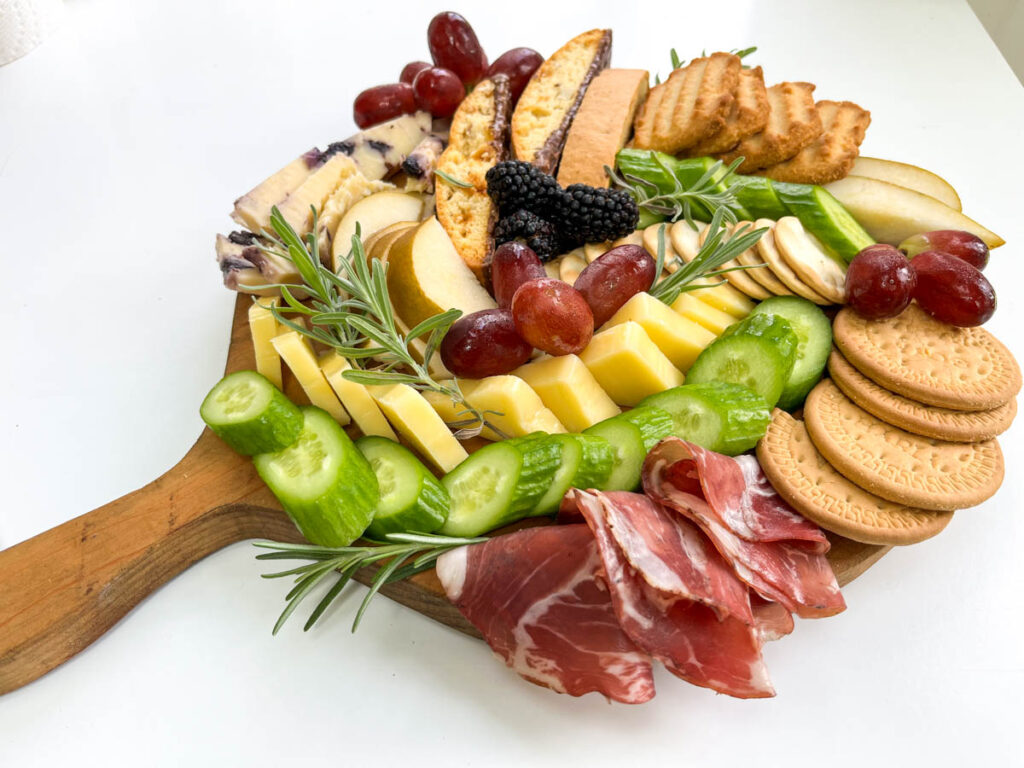
- One giant bunch of grapes → make 3 smaller grape clusters
- One big pile of crackers → create 3 cracker sections
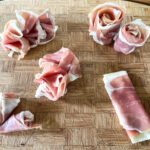
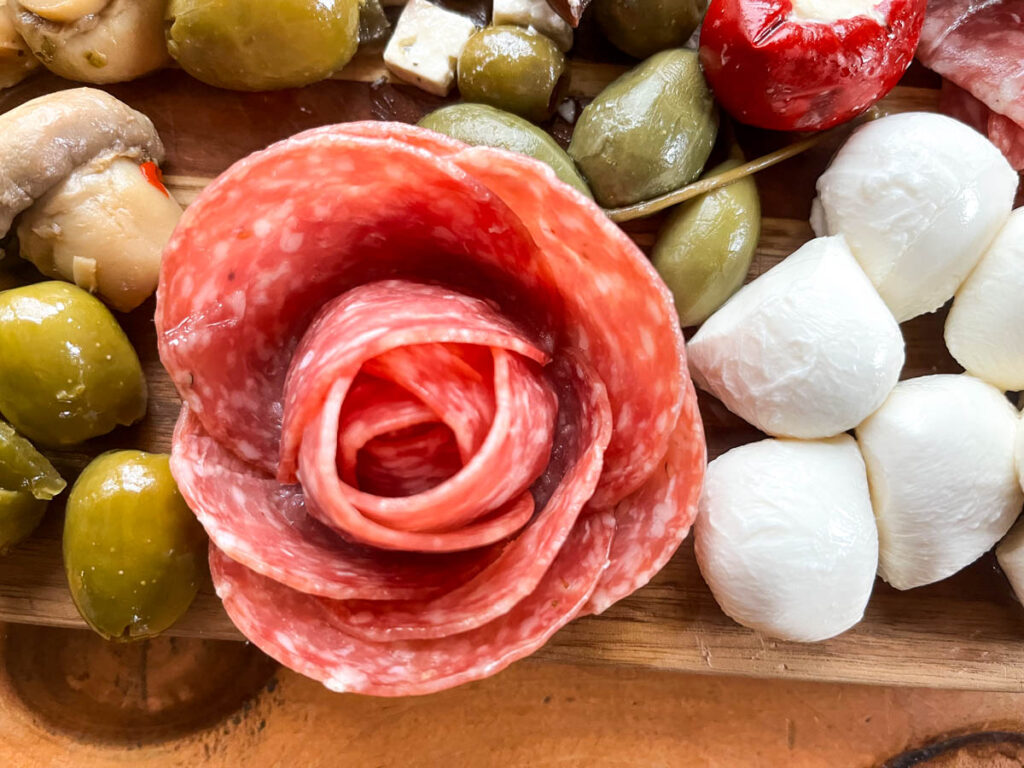
- One mound of salami → repeat the salami in 3 areas
Same amount of food. Same shopping list. Completely different look.
Why This Works
When one ingredient is dumped in a single spot, your eye stops there and the rest of the board reads as empty or unbalanced — even if it’s technically full. Repeating that ingredient in three spots does two things at once:
- It creates movement, so the eye travels around the whole board instead of getting stuck in one corner
- It creates balance, so no single area feels heavier or more “finished” than the rest
This is the same reasoning behind using odd-numbered groupings in general — three little clusters simply look more natural and intentional than one big one or two matching ones.

How to Use the Rule of 3 on Your Next Board
[PHOTO: overhead shot with three grape clusters called out]
- Pick your repeat-worthy ingredients. Anything you have a good amount of — grapes, salami, crackers, nuts, olives, berries — is a candidate. You don’t need to do this with every single item, just the ones you have enough of to split up.
- Divide into three, not evenly. Don’t measure it out perfectly — three even piles looks just as static as one big one. Let one cluster be slightly bigger, one smaller, one medium.
- Space them apart. Place your three clusters in different zones of the board, not clustered next to each other. That’s what actually creates the movement.
- Let them anchor your gaps. The three-cluster method is also a great way to fill awkward empty spots on a board — instead of one filler pile, use those extra bits to complete your three-repeat placements.
Rule of 3 vs. the 3 3 3 3 Rule
These two get confused because of the shared “3,” but they solve completely different problems:
| What it controls | What it solves | |
|---|---|---|
| 3 3 3 3 Rule | Ingredient selection (3 cheeses, 3 meats, 3 accompaniments, 3 crackers) | “What do I put on the board?” |
| Rule of 3 | Ingredient placement (repeat key items in 3 spots) | “Why does my board look flat?” |
You can absolutely use both at once — pick your ingredients with the 3 3 3 3 Rule, then place them with the Rule of 3.
A Few More Things to Keep in Mind
[Leave space here for your own board photos and notes]
Related Charcuterie Board Design Guides
- What is the 3 3 3 3 Rule?
- The 1-2-3 Approach to Charcuterie Boards
- The 7-Element Rule
- Beginner Board Formula
- 5 Ways to Fold Salami for Charcuterie Boards
- 2 Ways to Make a Salami Rose
- Top Tips for Cutting Cheese for a Charcuterie Board
- How to Design a Charcuterie Board (Step-by-Step Guide)
- Charcuterie Board for Beginners
FAQ
Is the Rule of 3 the same as the 3 3 3 3 Rule? No. The 3 3 3 3 Rule tells you what to buy. The Rule of 3 tells you where to put it once you’ve bought it.
Do I need to use the Rule of 3 on every ingredient? No — just the ones you have enough of to divide. A single wedge of brie doesn’t need to be split three ways; a bunch of grapes does.
What if I only have a small board with limited space? Scale it down. Even three small clusters the size of a quarter each will read better than one pile, no matter how small the board is.
Does this work for sweet or dessert boards too? Yes — the same principle applies to berries, chocolate, mini cookies, or any repeatable ingredient on a dessert board.